Pricing
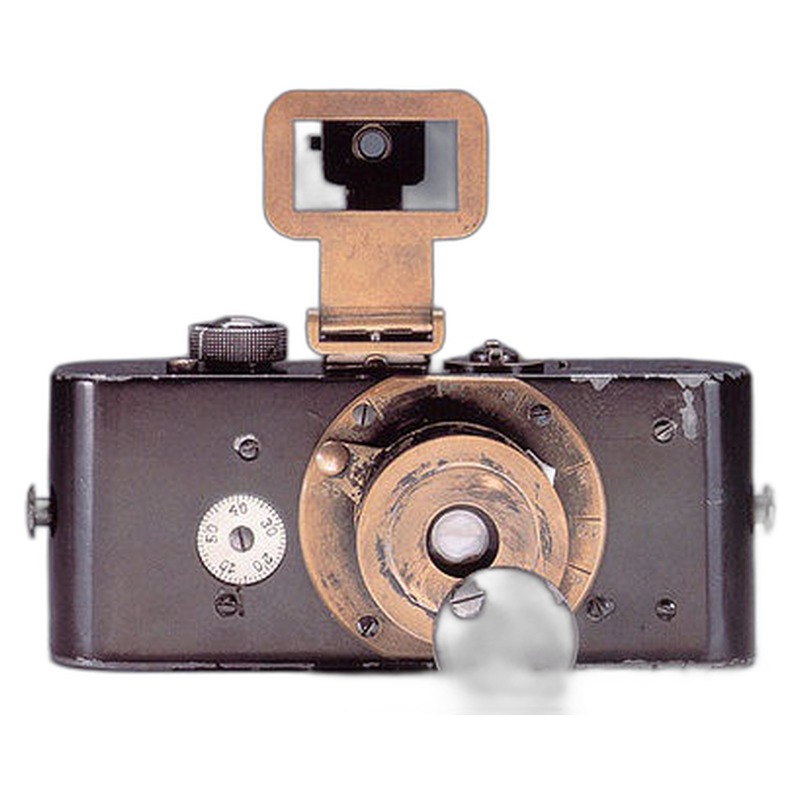
Leica Ur-Leica
Leica · Germany · 1914 · 135 film
The Ur-Leica, developed by Oskar Barnack at Leitz in 1914 as a prototype, stands as the foundational artifact of modern 35mm photography. Conceived initially as a compact cine camera for landscape photography, its revolutionary design adapted 35mm cine film to a 24x36mm frame format, a size soon standardized as the 135 film format. This leap forward addressed the cumbersome nature of large plate and roll-film cameras, enabling unprecedented portability and the ability to shoot unobtrusively. Although its production was limited and initially experimental, the Ur-Leica proved the viability of small-format, high-quality photography, directly leading to the Leica I (Model A) launched in 1920. Its compact body with coupled rangefinder and precision optics established the template for the modern 35mm camera system, fundamentally altering the practice of photography by making it truly mobile and accessible to photojournalists and artists alike. Its influence permeates nearly all subsequent camera design, from rangefinder to SLR to mirrorless systems. While few original Ur-Leicas survive, its existence marks the pivotal moment where portable, high-quality still photography became possible, paving the way for giants like Cartier-Bresson, who famously adopted the later Leica models for decisive moment photography.
Specifications
| Film Format | 135 |
/main.jpg)
/main.jpg)
 Enjoy this museum? Support on Ko-fi