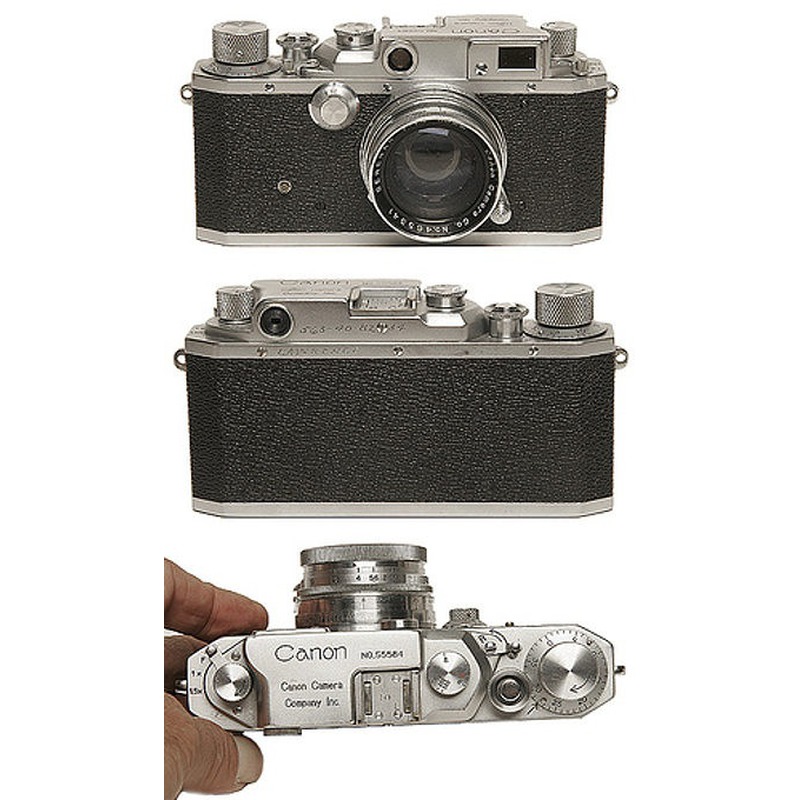
Canon IIC
Canon · Japan
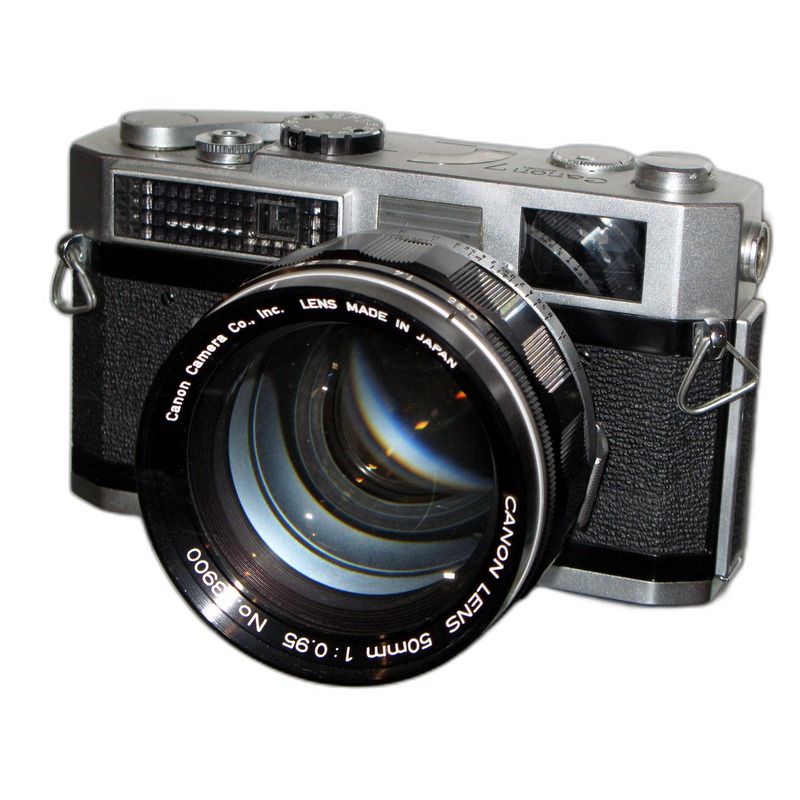
The Canon IIC represents a crucial transitional model in Canon's early post-war camera development, launched in the late 1940s. It was part of Canon's "S-series" of rangefinder cameras, positioned between their initial post-war models like the IIB and the more advanced models like the IIIS. The IIC introduced several important refinements over its predecessors, most notably combining the rangefinder and viewfinder into a single, brighter window, significantly improving focusing ease and composition clarity. This design choice directly influenced Canon's subsequent rangefinder models. It featured a reliable Compur-type leaf shutter and was compatible with Canon's early interchangeable lenses, offering a step-up in functionality and user experience from simpler fixed-lens models.
The camera utilized a coupled rangefinder mechanism built into its body, coupled to the lens focus helicoid, providing a reliable focusing system for its time. It typically accepted 35mm film and featured a moderately robust body construction characteristic of Canon's early precision instruments. While not possessing the widespread fame or groundbreaking innovations of later Canon SLRs like the AE-1 or the original Leica, the IIC holds significant importance as a key development in Canon's journey towards becoming a major camera manufacturer. It showcased their improving engineering capabilities and helped establish the foundation for their successful rangefinder lines before the advent of the single-lens reflex. Its design evolution is a clear indicator of Japan's growing confidence and technical prowess in the camera market following WWII.

 Enjoy this museum? Support on Ko-fi