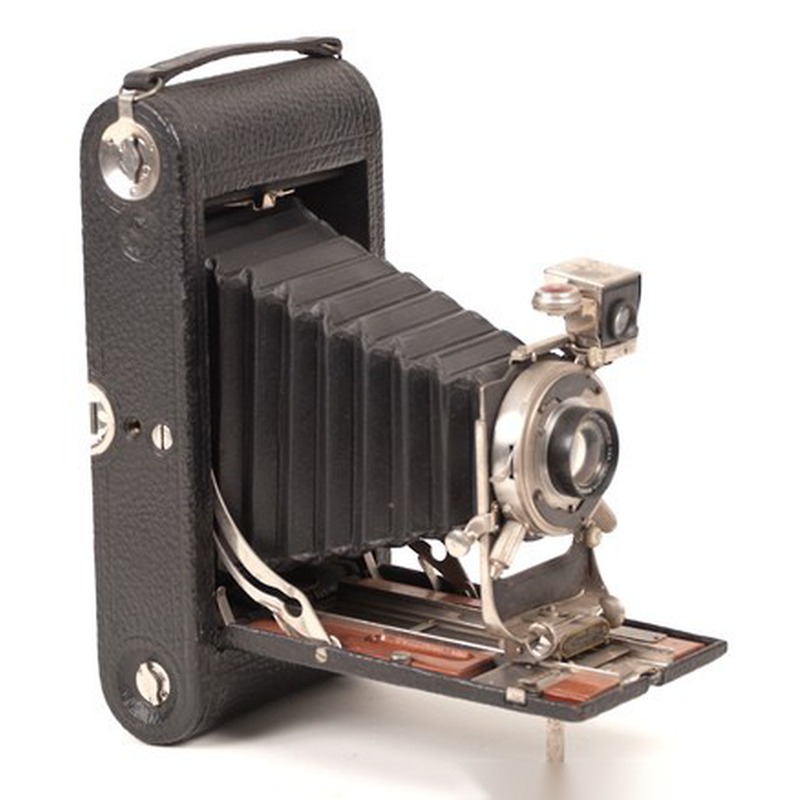
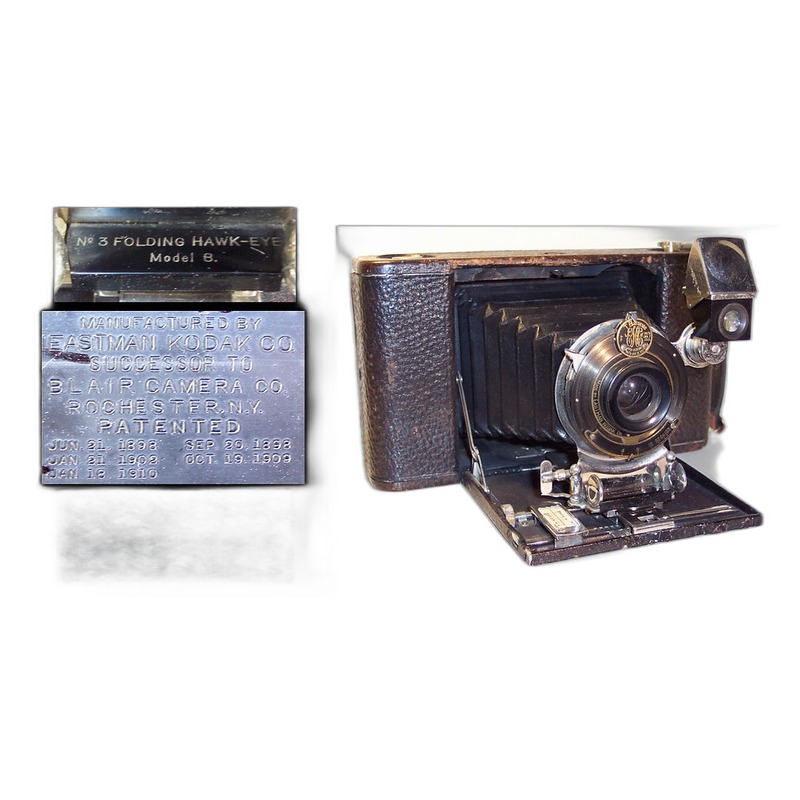
Kodak Folding Pocket No.3A Mod B2
Kodak · USA · 1903–1915 (12 years) · 135 film
The Kodak Folding Pocket No.3A Mod B2 represents a significant step in the evolution of portable photography during the early 1900s. Produced from 1903 to 1915, it was one of Kodak's early attempts to create a compact folding camera using the then-novel 35mm format, originally intended for motion picture film but repurposed for still photography. As a folding design, it offered a practical compromise between portability and image quality, allowing photographers to carry a relatively small camera capable of capturing larger negatives than contemporaries using smaller roll films. Its key innovation lay in successfully adapting the miniature 35mm format for still cameras, paving the way for the 35mm still photography boom that would follow later in the century. Characterized by its bellows mechanism for focusing and a simple, functional design typical of Kodak's consumer optics, it aimed to make high-quality, portable photography accessible to enthusiasts.
While not a legendary camera like the Leica I, the Folding Pocket No.3A Mod B2 occupies a notable place in the history of miniature format photography. It demonstrated the viability of using 35mm film for still images outside the cinema industry, fulfilling Kodak's strategy of offering increasingly compact yet capable cameras to a growing market of amateur photographers. Its production spanned over a decade, reflecting its role as a practical tool for capturing everyday scenes before the era of truly miniature precision 35mm cameras emerged. Today, it serves as an important artifact documenting the transition towards smaller, more portable photographic systems.
Specifications
| Film Format | 135 |
/main.jpg)
/main.jpg)
 Enjoy this museum? Support on Ko-fi