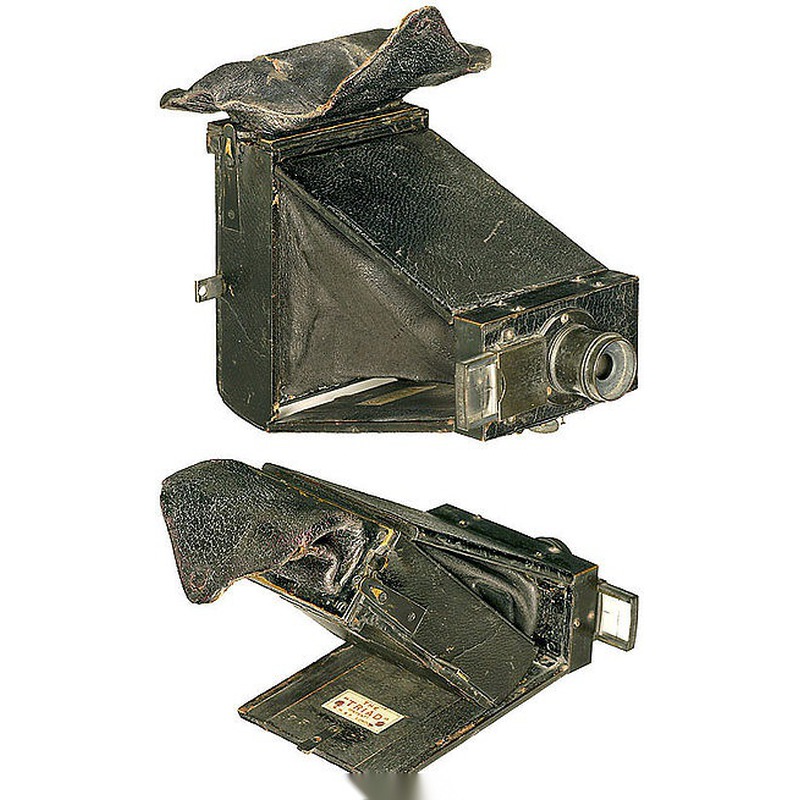
Houghton Triad
Houghton · UK · 1895–1897 (2 years) · 135 film
The Triad represents one of the earliest experimental attempts at utilizing 35mm format for still photography, predating the more widely recognized Leica by nearly three decades. Produced by Houghton from 1895 to 1897, this camera likely featured a compact design typical of early roll-film cameras, utilizing the then-nascent film format that would later become standard for miniature photography. The Triad was part of an innovative period in camera development as manufacturers explored smaller formats for greater portability, though details of its specific construction and mechanisms remain limited today.
While the exact technical specifications of the Triad are not well-documented, its existence suggests that Houghton was among the forward-thinking camera companies experimenting with what would become photography's most dominant format. The camera's production during the mid-1890s places it at a transitional moment when photography was evolving from larger plate formats toward more portable solutions. As an early 35mm camera, the Triad likely employed simpler mechanisms than later precision instruments, reflecting the technology of its era while demonstrating commercial interest in miniature photography before its eventual widespread adoption.
Specifications
| Film Format | 135 |
 Enjoy this museum? Support on Ko-fi