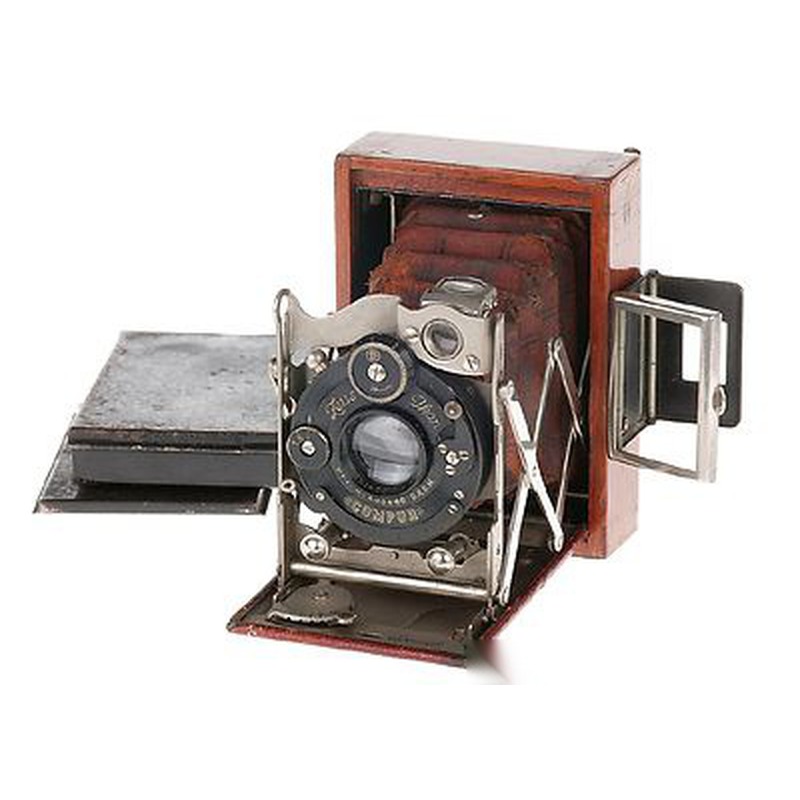
Zeiss Sonnet 303
Zeiss · Germany · 1927–1930 (3 years) · 135 film
Produced by Zeiss Ikon between 1927 and 1930, the Sonnet 303 represents a mid-tier offering in the crucial early development of the 35mm format. While lacking the groundbreaking innovations or iconic status of contemporaries like the Leica I, it exemplifies Zeiss's engineering applied to the emerging small-gauge market. Constructed during a period when 35mm was solidifying its viability for serious amateurs, the Sonnet 303 offered a compact and relatively affordable alternative to bulkier cameras, likely featuring a simplified rangefinder system and a focal plane shutter typical for its era. Its existence underscores Zeiss's broader strategy to participate in and shape the future of miniature photography, though it did not achieve the lasting fame or technological milestone status of other Zeiss or competing 35mm models of the late 1920s.
As a Zeiss product, the Sonnet 303 undoubtedly incorporated reliable German engineering and build quality for its time, reflecting the company's reputation for precision. However, its specific features, lens options, and exact market positioning relative to other contemporary 35mm cameras remain less documented in readily available information today. It serves as a representative example of the functional, well-made cameras that filled the gap between the earliest experimental 35mm devices and the more sophisticated models that would follow later in the decade, contributing incrementally to the acceptance of 35mm as a serious photographic format.
Specifications
| Film Format | 135 |
/main.jpg)
/main.jpg)
/main.jpg)
/main.jpg)
 Enjoy this museum? Support on Ko-fi