/main.jpg)
Pricing
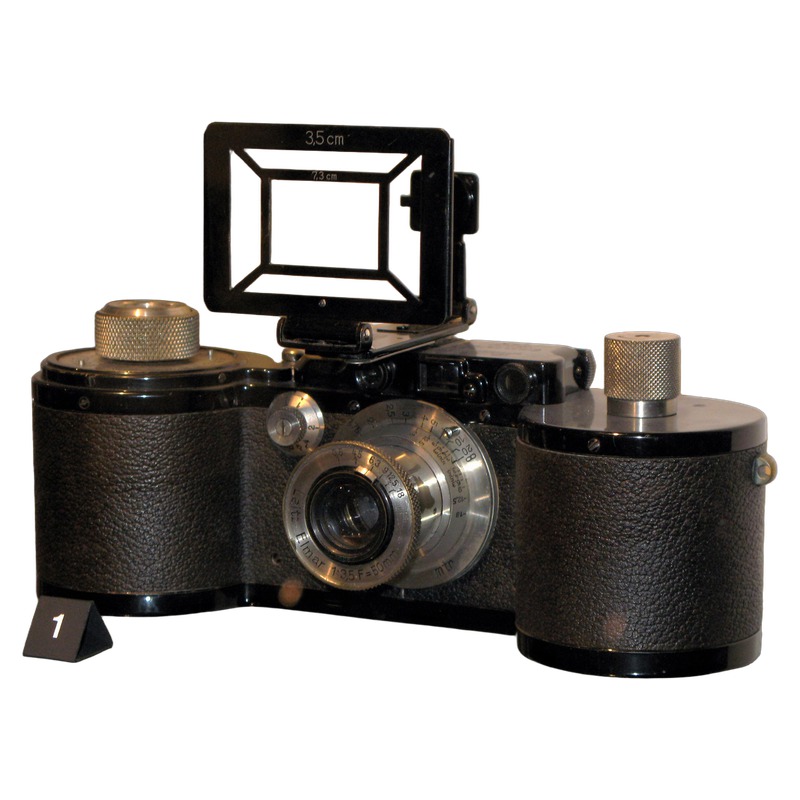
Leica I Mod C (Hektor)
Leica · Germany
The Leica I Mod C (Hektor) represents a significant, albeit early, iteration in the pioneering Leica I series, foundational to the 35mm camera revolution. Building directly upon the groundbreaking Leica I (Mod A) introduced in 1925, this model continued to refine the concept of a compact, high-quality 35mm rangefinder camera for the discerning amateur and professional photographer. Its most defining feature is the inclusion of the Hektor 50mm f/2.5 lens, replacing the earlier Elmar 3.5; this faster aperture offered improved low-light capability and greater subject separation, marking a tangible performance improvement for the time. Constructed with meticulous attention to detail typical of Leica, featuring a compact die-cast body and precision mechanisms, it embodied the brand's commitment to portability and optical excellence. While not as iconic or widely produced as later models, the Leica I Mod C (Hektor) stands as an important artifact demonstrating the incremental evolution that solidified 35mm photography as a viable and powerful medium.
Produced during the late 1920s or early 1930s (exact date uncertain), this camera was part of the generation that proved the viability of the small-format camera. Its existence underscores Leica's continuous innovation in the crucial early years of 35mm photography, making it a noteworthy example of engineering advancement for its era. Though lacking the legendary status of later Leicas like the M3, it holds a respectable place in the history of photography as a significant step forward in camera design and performance, representing the practical application of Oskar Barnack's original vision for portable, high-quality cameras.
/main.jpg)
/main.jpg)
/main.jpg)
 Enjoy this museum? Support on Ko-fi