Pricing
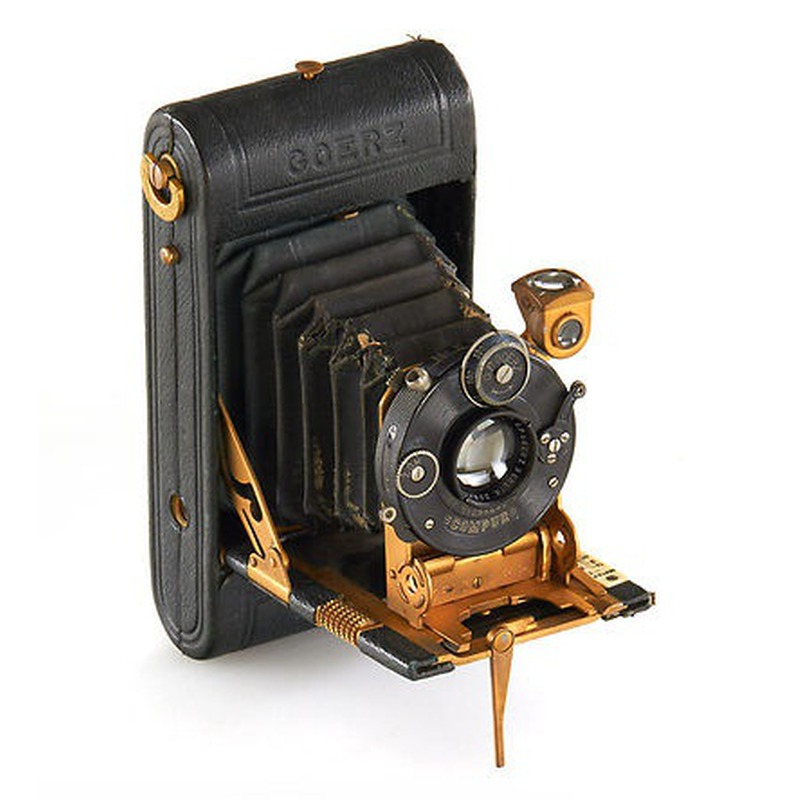
Goerz Roll-Tenax Luxus blue-green
Goerz · Germany · 1922 · 135 film
The Roll-Tenax Luxus blue-green represents Goerz's entry into the burgeoning 35mm market of the early 1920s, introduced alongside other pioneering small-format cameras like the Leica prototype. As a roll-film camera taking 135 cartridge film – a format later standardized for still photography – it featured a compact, likely metal body, perhaps finished in a distinctive blue-green enamel or leatherette as implied by the name. Designed for practical, snapshot-style photography, it likely utilized focal plane or between-the-lens shutters typical of the era, with a simple viewfinder for framing. Its significance lies as an early German attempt to popularize the smaller, more portable 35mm format before its eventual dominance decades later, though it lacked the groundbreaking innovations or iconic status of later models.
While the specific design details and operational features of the Tenax Luxus remain obscure due to its historical obscurity, its production in 1922 places it alongside other nascent 35mm systems pushing the boundaries of handheld photography. Goerz, primarily renowned for its high-quality Anastigmat lenses, applied its optical expertise to this camera, though the overall mechanical design was likely more utilitarian than revolutionary. The Tenax Luxus served its purpose as an accessible introduction to small-format roll film photography for consumers of the time, contributing incrementally to the adoption of a format that would transform the industry.
Specifications
| Film Format | 135 |
/main.jpg)
/main.jpg)
/main.jpg)
/main.jpg)
 Enjoy this museum? Support on Ko-fi