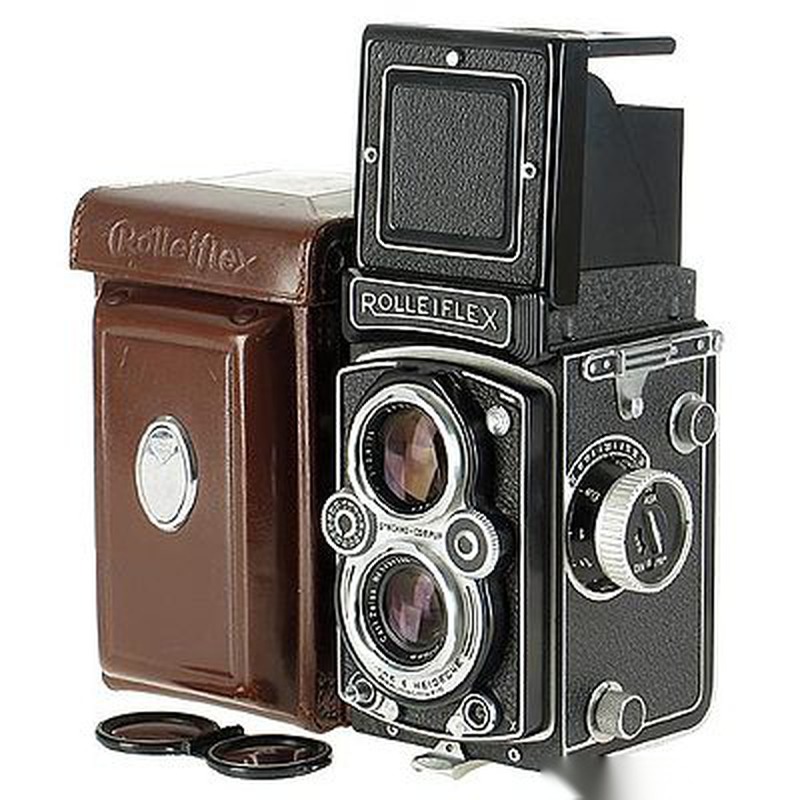
Rolleiflex 3.5 B
Rollei · Germany
The Rolleiflex 3.5 B stands as a quintessential example of mid-20th century German engineering and photographic innovation, representing the evolution of Franke & Heidecke's iconic twin-lens reflex (TLR) system. As part of the Rolleiflex 2.8F lineage, it shared the classic 6x6 medium format that defined the brand's legacy, offering a portable yet robust solution for professional and serious amateur photographers. Its construction exemplifies meticulous craftsmanship: all-metal body with precision gears, coupled rangefinder for accurate focusing, and typically equipped with a Carl Zeiss Tessar or Planar lens—renowned for their exceptional sharpness and contrast. The camera's waist-level finder encourages a deliberate, compositional shooting style, while built-in selenium light meters in later variants provided precise exposure control without bulk, making it a versatile tool for documentary, portrait, and fashion photography.
Historically, the Rolleiflex 3.5 B was instrumental in shaping mid-century photographic aesthetics, favored by luminaries such as Henri Cartier-Bresson, who famously used Rolleiflex cameras to capture candid moments with unparalleled clarity. Its design innovations, including the synchronized shutter and interchangeable viewfinders, set industry standards for TLR cameras, influencing generations of medium format systems. Produced during the post-WWII boom years (likely late 1940s-1950s based on its model designation), it bridged the gap between pre-war Rolleiflex classics and the modern 2.8F era. Despite its technical sophistication, its compact size and intuitive handling democratized high-quality medium format photography, cementing Rollei's reputation for merging mechanical precision with artistic vision.
/main.jpg)
/main.jpg)
 Enjoy this museum? Support on Ko-fi