Pricing
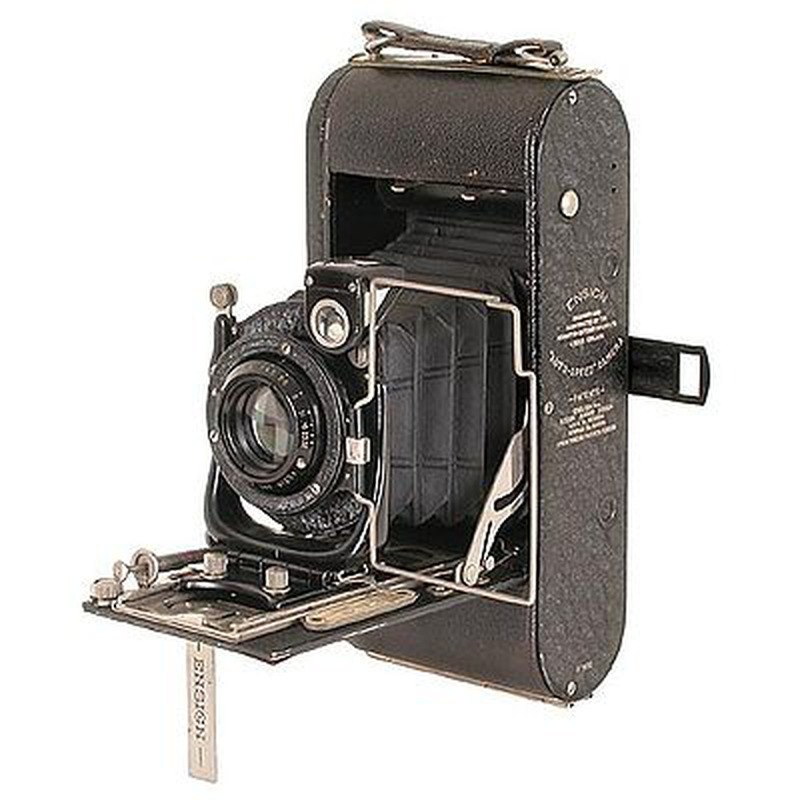
Houghton Ensign Autospeed
Houghton · UK · 1932 · 135 film
The Ensign Autospeed represents a significant entry by the British manufacturer Houghton into the burgeoning 35mm market of the early 1930s. Introduced in 1932, shortly after Leica had established the 35mm format's viability, it aimed to offer a domestically produced alternative to the dominant German models. As a "Type Unknown" camera surviving only by its 135 format designation, it likely shared the basic characteristics of contemporary 35mm compacts: a small body, fixed or limited interchangeable lens mount (possibly proprietary), and a focal plane shutter. The name "Autospeed" suggests a focus on automation, potentially hinting at features like a coupled rangefinder for focusing ease or an automatic exposure control system – though specifics remain unconfirmed due to the lack of surviving examples or detailed documentation.
While not achieving the legendary status of the earliest Leicas or competing directly with high-end German brands, the Autospeed holds niche importance as an early British attempt to democratize 35mm photography. Its production date firmly places it within a critical formative period for miniature cameras, reflecting Houghton's ambition to capture a share of the growing market for small, portable cameras. Its survival in 135 format indicates it was designed to expose standard 35mm cine film strips, a crucial technical adaptation for still photography that defined the era's most significant advance. Its historical value lies primarily in being a tangible example of British manufacturing initiative during the format's critical developmental years.
Specifications
| Film Format | 135 |
/main.jpg)
/main.jpg)
 Enjoy this museum? Support on Ko-fi