/main.jpg)
Pricing
Kodak Brownie No.2A Model B (Canada)
Kodak · USA · 1920–1924 (4 years) · 135 film
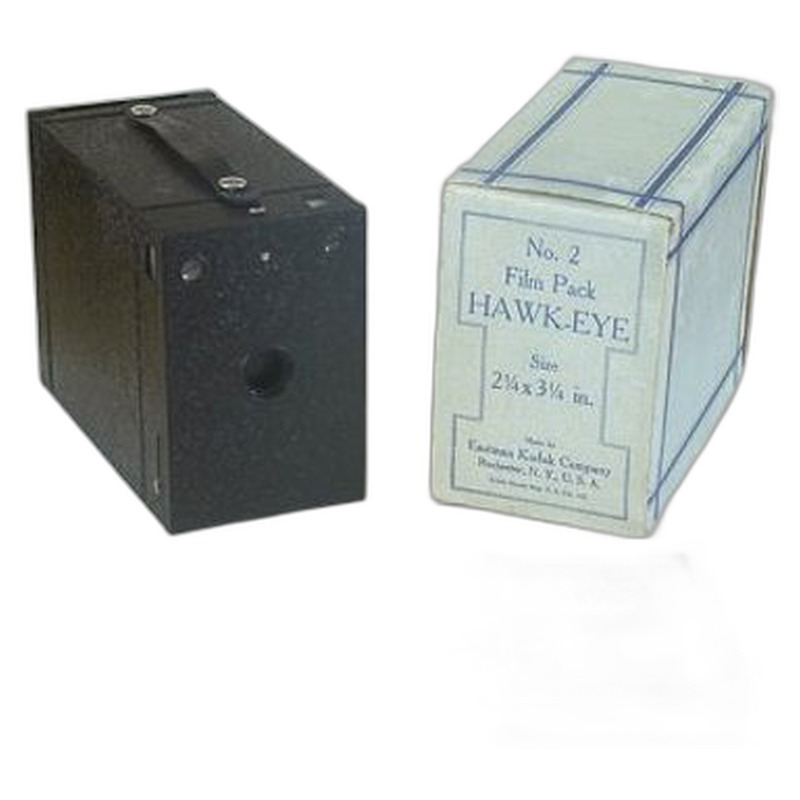
The Brownie No.2A Model B (Canada) represents Kodak's early foray into the 35mm format during the early 1920s. As part of the legendary Brownie series, this model aimed to bring the convenience of roll film photography to the mass market, though initially on a smaller scale than the company's ubiquitous larger format Brownies. It featured a simple, compact metal body design, characteristic of the era's practical approach. Equipped with a fixed-focus lens and a basic shutter mechanism, the camera was purely utilitarian, catering to snapshooters seeking an affordable, point-and-shoot experience with the then-modern 135 film format. Its production period of 1920-1924 places it among Kodak's first attempts to popularize 35mm for the amateur photographer before the rise of more sophisticated European compact cameras like the Leica.
While not a technological innovator like the Leica, the Brownie No.2A Model B played a role in establishing 35mm film as a viable consumer option within Kodak's ecosystem. Its significance lies more in its contribution to Kodak's strategy and the gradual shift towards smaller formats than in any unique features. The camera embodies the design philosophy of making photography accessible and straightforward, prioritizing affordability and ease of use over technical complexity, a core principle of the Brownie line. Its existence highlights Kodak's effort to adapt its popular brand to emerging film technology, setting the stage for future, more successful 35mm Kodak models like the Retina series.
Specifications
| Film Format | 135 |
/main.jpg)


/main.jpg)
 Enjoy this museum? Support on Ko-fi