/main.jpg)
Pricing
Leica KE-7A (Civilian)
Leica · Germany · 1972 · 135 film
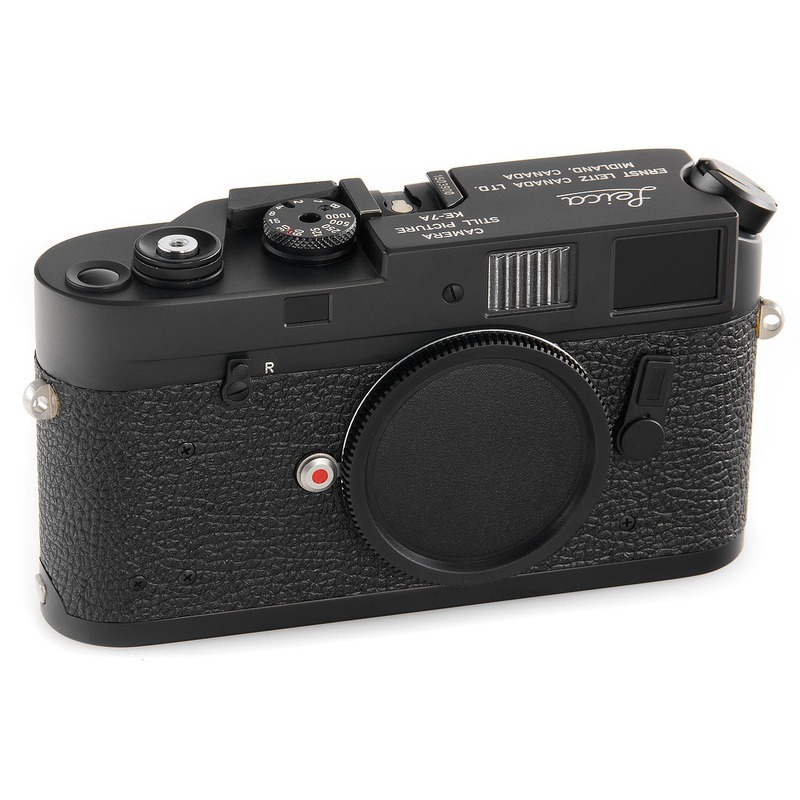
The Leica KE-7A (Civilian) was introduced in 1972 as a 35mm camera derived directly from Leica's earlier KE-7A military model. Essentially a civilian adaptation of a reconnaissance camera, it shared the robust, utilitarian design of its military counterpart, featuring a simplified top plate with basic controls and a fixed, non-interchangeable lens system typical of that era's Leica engineering. Positioned as a more affordable option compared to Leica's prestigious M series rangefinders, the KE-7A (Civilian) offered Leica's renowned optical quality and mechanical reliability in a no-frills package aimed at photographers who needed a durable, high-performance tool without the complexity or cost of interchangeable lens systems. While not groundbreaking in features, its existence represented Leica's ability to adapt its precision manufacturing expertise for diverse markets beyond the elite professional photographer.
The camera's significance lies in its embodiment of Leica's commitment to build quality and functional design, even within a more accessible product tier. Its association with a military lineage lent it an aura of rugged dependability, appealing to a specific segment of users who valued reliability over system flexibility. Although it did not achieve iconic status or introduce major innovations, the KE-7A (Civilian) serves as a notable example of Leica's mid-20th century diversification and its enduring reputation for craftsmanship in a slightly less conventional form factor.
Specifications
| Film Format | 135 |
/main.jpg)
/main.jpg)
 Enjoy this museum? Support on Ko-fi