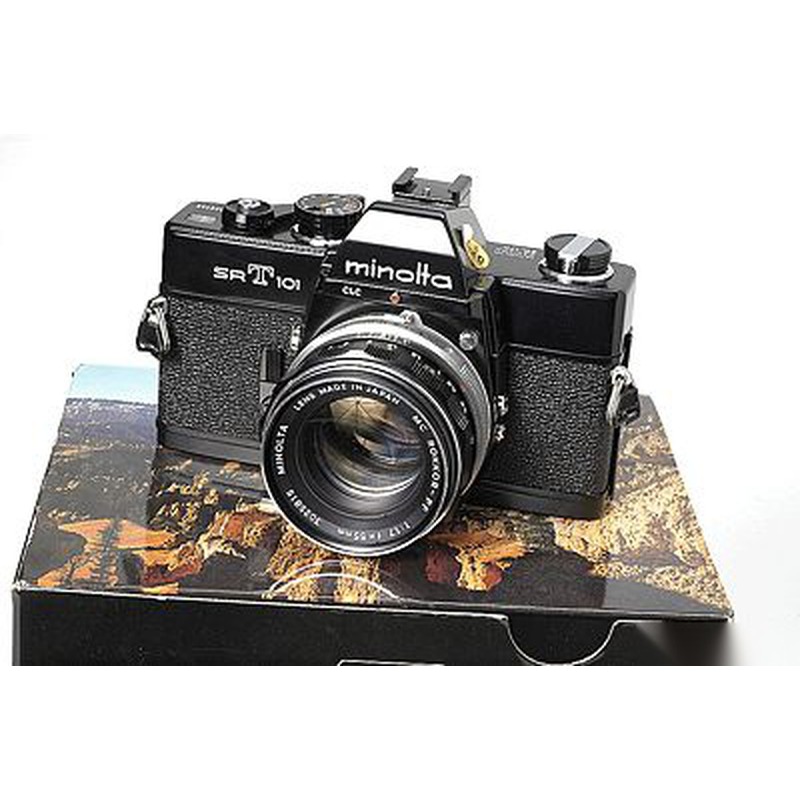
Minolta SRT-101
Minolta · Japan
The Minolta SRT-101, introduced in 1976, stands as a significant entry in Minolta's SR Twin-cam series, representing a solid workhorse in the 35mm SLR market. This camera featured through-the-lens (TTL) metering, a notable advancement for its time, allowing photographers to accurately determine exposure without external light meters. The SRT-101 utilized a cloth focal plane shutter with speeds ranging from 1 second to 1/1000 second, plus a bulb setting for long exposures. Equipped with Minolta's MC lens mount, it offered compatibility with a wide range of lenses, making it versatile for various photographic needs. The camera was known for its reliable build quality and accurate metering, earning it a reputation among amateur and semi-professional photographers who sought dependable equipment without the premium cost of professional systems.
During its production run, the SRT-101 was positioned as an affordable yet capable alternative to more expensive SLRs from competitors like Canon and Nikon. Its straightforward controls and robust construction made it particularly popular with students, hobbyists, and those transitioning from simpler point-and-shoot cameras. The camera's design reflected practical considerations, with a top shutter speed dial and a separate aperture ring on lenses, familiar to most SLR users of the era. While it didn't introduce revolutionary technology, the SRT-101 refined existing concepts in an accessible package, contributing to Minolta's growing presence in the global photography market. Today, it remains a respected vintage option for those seeking an authentic analog photography experience without the complexity or cost of professional systems from the same era.
/main.jpg)
/main.jpg)
 Enjoy this museum? Support on Ko-fi