Pricing
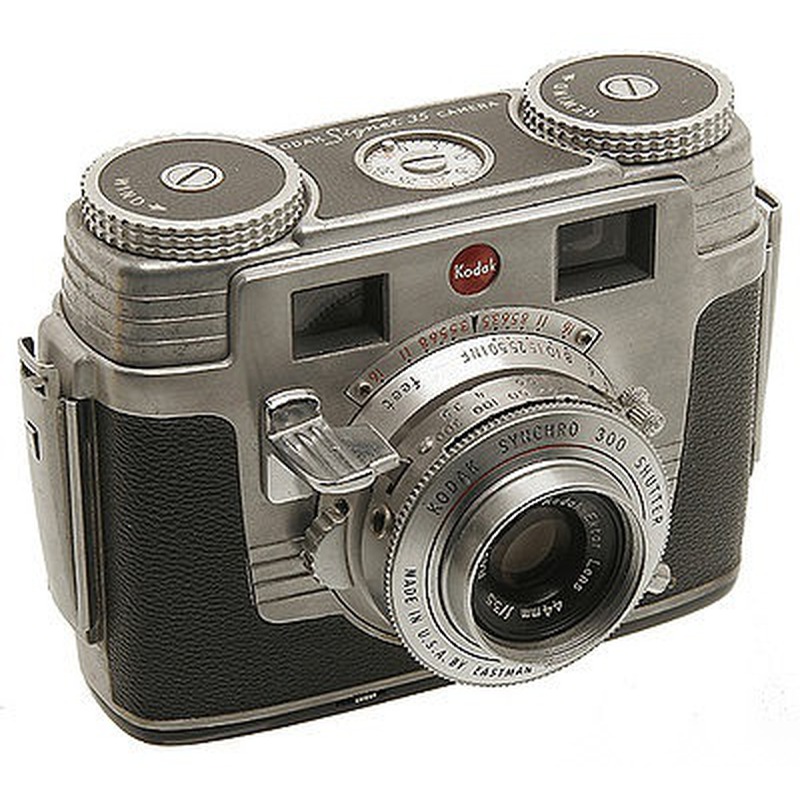
Kodak Signet 35
Kodak · USA · 1951–1958 (7 years) · 135 film
Kodak's Signet 35 represents a typical mid-century American approach to 35mm photography: a practical, user-focused camera designed for the amateur market. Produced for seven years (1951-1958), it utilized the standard 135 film format, positioning it as an accessible step up from Kodak's simpler box cameras and folding models towards more sophisticated 35mm designs. It featured a coupled rangefinder for focusing, a Kodak Ektar lens (typically 44mm f/3.5), and a simplified shutter system with speeds ranging from B to 1/300s, prioritizing ease of use over technical complexity or ultimate image quality. Its straightforward controls and robust, Bakelite-and-metal construction aimed to make 35mm film photography reliable and unintimidating for the family photographer.
While not revolutionary in design or optical performance, the Signet 35 holds significance as a representative example of post-WWII American consumer camera manufacturing. It filled a niche for those desiring the advantages of 35mm—smaller size, more exposures, sharper negatives—without the cost or complexity of European imports like Leica or Contax. Its longevity of production indicates a solid, reliable product that met the demands of its era, embodying Kodak's strategy of bringing new technologies to the masses. It remains a straightforward example of 1950s American camera engineering, focused on functionality and accessibility.
Specifications
| Film Format | 135 |
/main.jpg)
/main.jpg)
 Enjoy this museum? Support on Ko-fi