Pricing
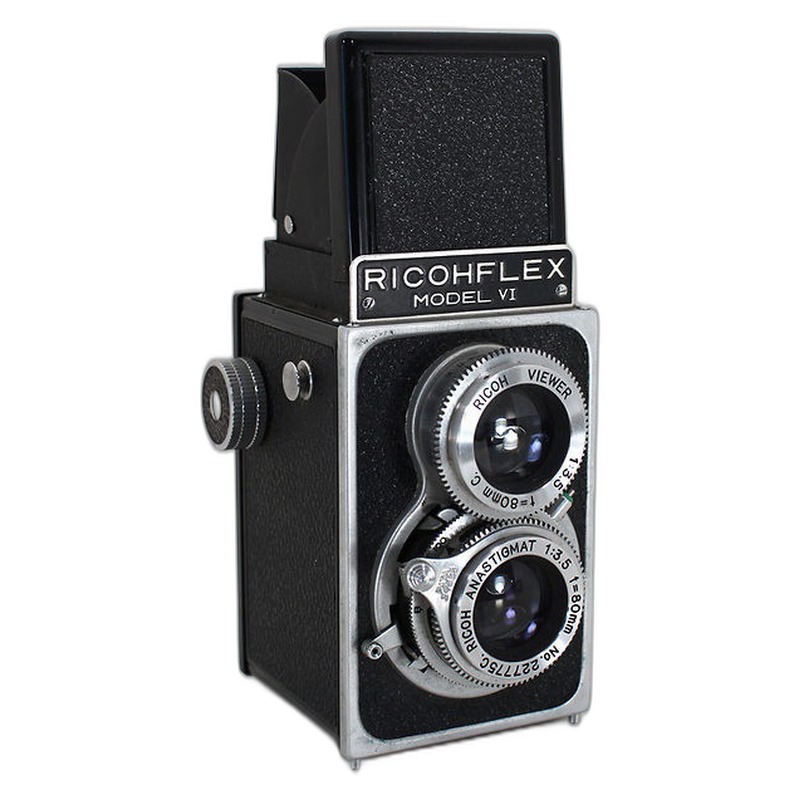
Riken Ricohflex Model VI
Riken · Japan
The Ricohflex Model VI by Riken is a Twin Lens Reflex (TLR) camera, representing a classic mid-century design focused on simplicity and functionality. As part of Ricohflex series produced by the Japanese company Riken (later Ricoh), it likely featured a 6x6 cm format using 120 roll film, aimed at amateur photographers seeking an accessible yet reliable medium-format camera. The TLR design employs a coupled viewing lens for waist-level composition and a taking lens for exposure, providing a stable, parallax-corrected preview without the complexity of interchangeable optics or advanced metering. Its construction was typical of post-war Japanese cameras: lightweight with a pressed-metal body, simple controls for shutter speed and aperture, and a built-in optical viewfinder, prioritizing ease of use over cutting-edge innovation.
While the Model VI lacks documented groundbreaking features or celebrity endorsements, it exemplifies the era’s shift toward accessible medium-format photography. Ricoh’s TLRs filled a niche between German premium models (like Rolleiflex) and low-end box cameras, offering decent image quality at a moderate price point. Its unpretentious design and reliable performance made it a practical choice for enthusiasts and serious hobbyists, contributing to the democratization of medium-format photography in mid-20th-century Japan. Collectors now value such cameras for their historical context as workhorses of Japanese manufacturing, though they are overshadowed by iconic counterparts in global photography history.
/main.jpg)
 Enjoy this museum? Support on Ko-fi