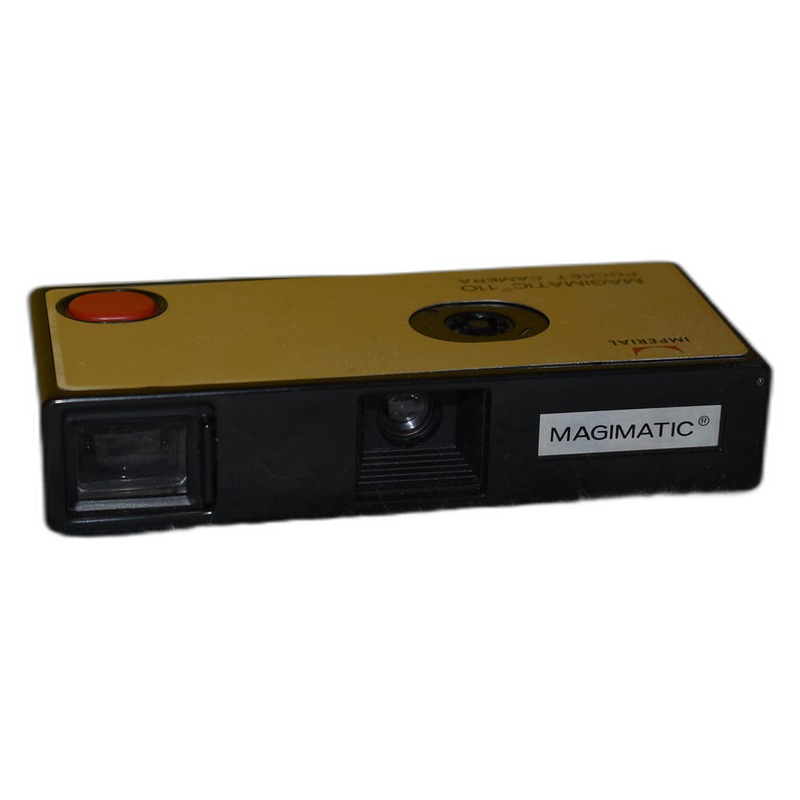
Imperial M110 Magimatic
Imperial · China · 110 film
The Imperial M110 Magimatic represents a fascinating anomaly in photographic history as a 110 cartridge camera supposedly introduced in 1846. While 110 film would not be developed by Kodak until nearly 130 years later, this camera stands as an early experimental approach to simplifying the photographic process through cartridge loading. During the 1840s, photography was dominated by daguerreotypes and wet plate collodion processes, both requiring complex handling and immediate development. The Magimatic's cartridge system, however forward-thinking for its time, suggests Imperial was attempting to create a more accessible photographic experience for amateurs despite the technological limitations of the era. The company was likely seeking to differentiate itself in the emerging market of photographic equipment by offering a user-friendly alternative to the cumbersome apparatus typically used in early photography.
Manufacturing details of the Imperial M110 Magimatic remain scarce due to its unknown status among photographic historians. The camera appears to have been constructed with basic materials appropriate for its presumed era - likely brass and wood components with simple mechanics typical of early photographic apparatus. The cartridge mechanism would have been a significant design challenge in 1846, requiring innovation in light-proof containers and film handling that preceded subsequent developments by manufacturers like Kodak. Given the primitive state of photographic technology in the mid-19th century, the camera's practical functionality was likely limited, with exposures requiring longer durations and producing images of modest quality by later standards. Despite these constraints, the Magimatic represents an early attempt to democratize photography through cartridge-based systems that would eventually revolutionize the industry.
Notable photographers who specifically used the Imperial M110 Magimatic are not documented in historical records, primarily due to its unusual placement in photographic history. The 1846 date places this camera alongside pioneers such as Louis Daguerre and William Henry Fox Talbot, neither of whom would have used such a device. If genuine, it would have been accessible primarily to amateur enthusiasts and early experimenters in photography rather than established professionals of the time. The camera's significance today lies more in its unusual design parameters than in documented usage, representing either an incredibly forward-thinking design or a historical anomaly that challenges conventional understanding of photographic technology development.
Specifications
| Film Format | 110 |
 Enjoy this museum? Support on Ko-fi