Pricing
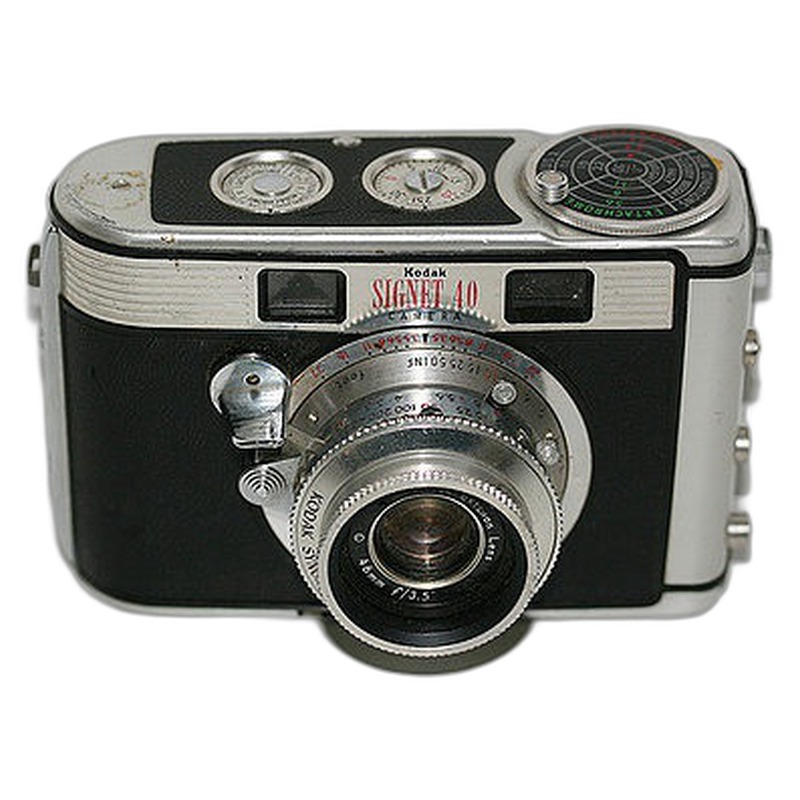
Kodak Signet 40
Kodak · USA · 1956–1959 (3 years) · 135 film
The Kodak Signet 40 represents a mid-tier offering in Kodak's post-war shift towards 35mm film photography for the American market. Produced from 1956 to 1959, it was positioned as a step-up model from Kodak's basic Retina series, yet remained firmly within the realm of consumer snapshot cameras. Characterized by its straightforward design, the Signet 40 likely featured a fixed or simple focusing lens system, a basic coupled rangefinder or a simplified viewfinder, and an automatic exposure control mechanism typical for its era – Kodak's push towards user-friendliness. Constructed primarily from metal and early plastics, it prioritized reliability and ease of use over advanced photographic features or mechanical sophistication, serving as a practical tool for everyday family photography during the mid-to-late 1950s boom in amateur picture-taking.
While not revolutionary in design or function, the Signet 40 holds significance as part of Kodak's broader strategy to popularize the 35mm format within its traditional customer base accustomed to roll film. It exemplifies the engineering compromise of the time: incorporating modern 35mm capabilities within a robust, relatively affordable package that maintained Kodak's reputation for accessible imaging. Its production run ended as Kodak further diversified its 35mm lineup before ultimately focusing more on Instamatics and pocket cameras in the following decade, marking it as a distinct, though not groundbreaking, product in the company's history.
Specifications
| Film Format | 135 |
/main.jpg)
 Enjoy this museum? Support on Ko-fi