Pricing
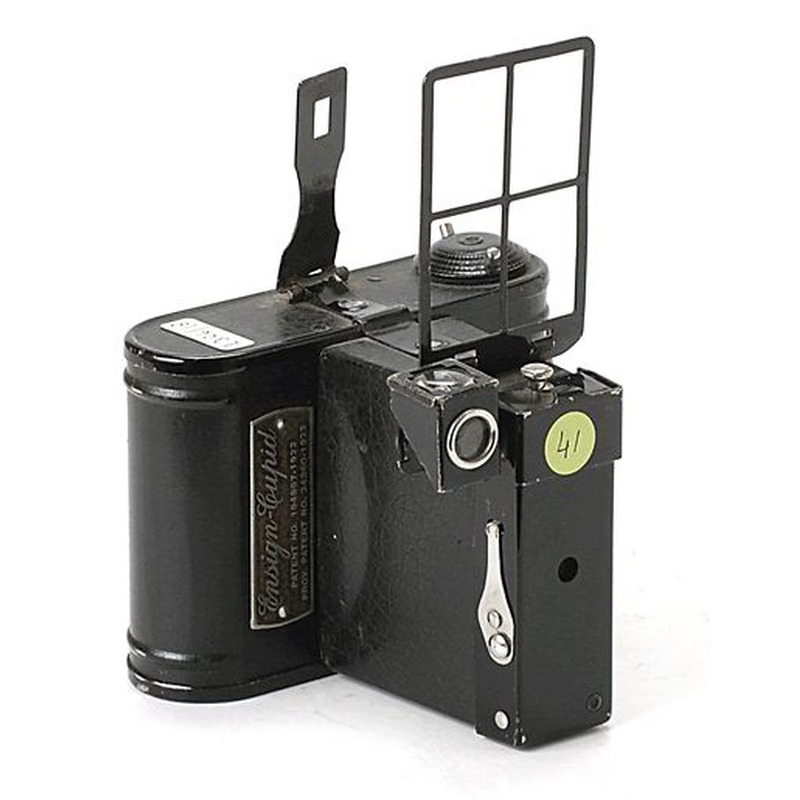
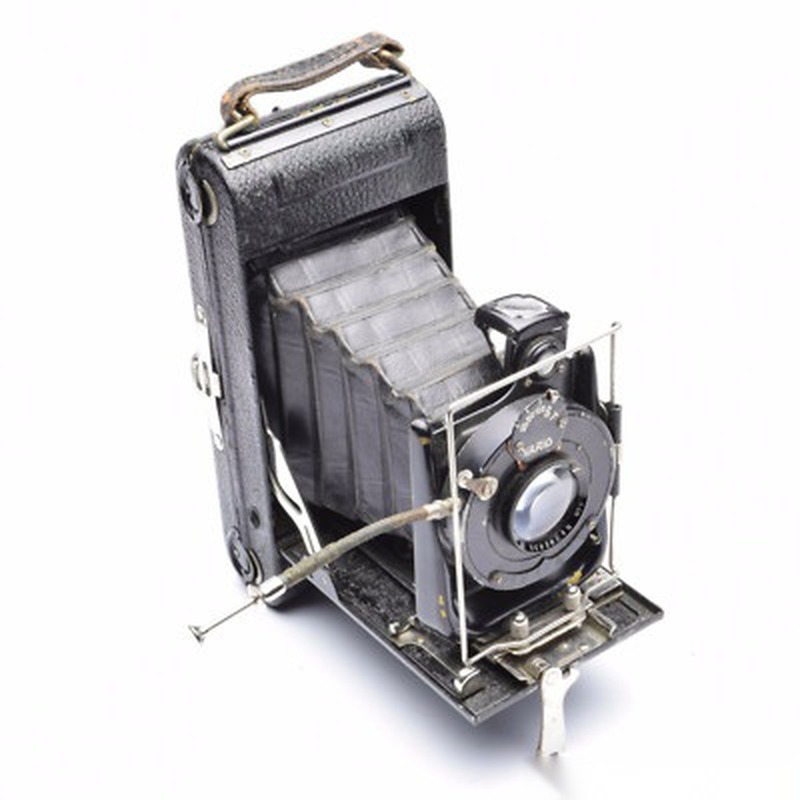
Houghton Ensign Cupid
Houghton · UK · 1922 · 135 film
The Ensign Cupid represents a significant early entry into the burgeoning 35mm film market by Houghton, a prominent British optical and photographic equipment manufacturer. Introduced in 1922, it arrived shortly after the pivotal 1913 Ur-Leica prototype and contemporaneously with other nascent 35mm experiments, cementing its position among the first generation of practical 35mm cameras available to the public. Designed as a compact, simple camera, it utilized the then-novel 35mm perforated film in cassettes, a format originally developed for motion picture stock but increasingly adapted for still photography by innovative makers like Houghton. The Cupid likely featured a basic metal or potentially Bakelite body, a simple fixed-focus or rudimentary lens, and a rotary shutter mechanism typical of budget cameras of the era. Its primary significance lies in demonstrating Houghton's early commitment to the 35mm format alongside competitors, making it an important, albeit not revolutionary, artifact documenting the evolution of miniature photography towards the mass-market 35mm cameras that would eventually dominate the industry.
While not possessing the groundbreaking status of cameras like the Leica I or the Kodak Retina, the Cupid holds value as a tangible example of the early practical application of 35mm film in a still camera. It reflects the period's technological transition, where manufacturers experimented with adapting existing motion picture technology to a new still photographic format. Its relatively straightforward design and affordability (implied by its name and contemporary market context) aimed to bring the convenience and smaller size of 35mm photography to amateur photographers before more sophisticated systems became widespread. Surviving examples serve as historical markers of this formative stage in 35mm camera development.
Specifications
| Film Format | 135 |
/main.jpg)
/main.jpg)
 Enjoy this museum? Support on Ko-fi