Pricing
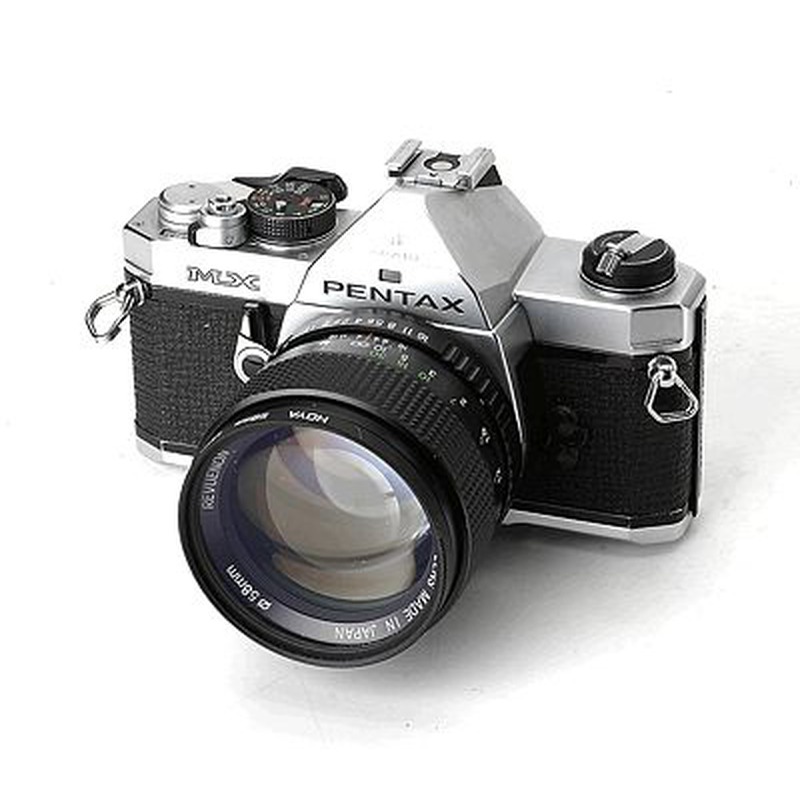
Pentax MX
Pentax · Japan · 1976 · 135 film
The Pentax MX, introduced in 1976, represented Pentax's formidable entry into the competitive professional 35mm SLR market alongside contemporaries like the Canon F1 and Nikon F2. Designed by engineers who had previously worked for Mamiya, the MX offered a remarkably compact and robust body constructed primarily of brass and steel, prioritizing durability and precision operation over excessive features. Key attributes included a match-needle metering system with center-weighted averaging, a top shutter speed of 1/1000s with a reliable Copal Square shutter, and a highly refined mechanical shutter mechanism that continued to function without batteries. Its exceptional viewfinder, offering 95% coverage and a bright, clear image, coupled with excellent ergonomics and intuitive controls, made it a favored tool for demanding photojournalists and serious enthusiasts who valued reliability and tactile feedback over automation. While lacking the advanced metering of later Pentax models like the K2, the MX became renowned for its bomb-proof build quality and precise engineering, earning a cult status among photographers who appreciate its straightforward, no-nonsense design and legendary mechanical longevity.
Positioned as a "professional's workhorse" alternative to the flagship Pentax K series, the MX filled a niche for photographers seeking ultimate reliability and a more traditional shooting experience. Its compact size and relatively light weight (for its era) compared to many professional SLRs added to its practicality. The MX maintained strong production throughout the late 1970s and into the early 1980s, solidifying its reputation as a dependable camera capable of handling harsh conditions. Its influence lies in its embodiment of peak mechanical SLR craftsmanship, representing a high point in Pentax's engineering prowess just before the widespread adoption of more automated electronic systems. It remains highly regarded by those who value tangible control and enduring build in a camera.
Specifications
| Film Format | 135 |
 Enjoy this museum? Support on Ko-fi