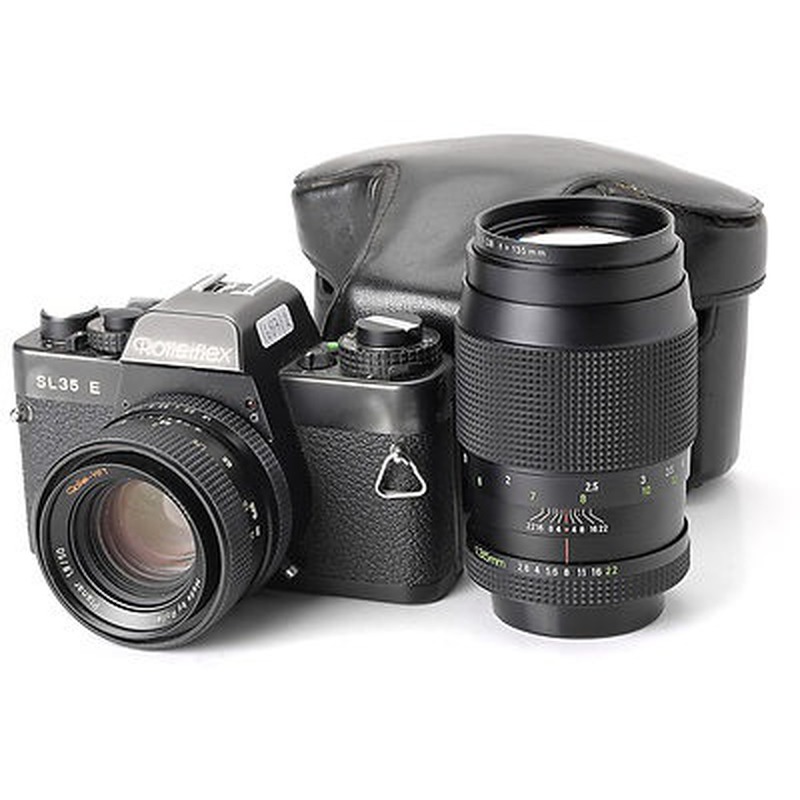
Rolleiflex SL-35 E
Rollei · Germany
The Rolleiflex SL-35 E was Rollei's initial entry into the competitive 35mm single-lens reflex (SLR) market during the early 1970s, marking a significant departure from the company's renowned twin-lens reflex cameras like the Rolleiflex 2.8F. Designed to offer a sophisticated and compact alternative to models from established SLR manufacturers like Nikon and Canon, the SL-35 E featured a robust metal body and incorporated Rollei's characteristic attention to detail. It utilized the innovative QBM (Quick Bayonet Mount) system, allowing for relatively fast lens changes and supporting Rollei's own high-quality Carl Zeiss lenses, including the acclaimed Planar and Tessar designs, bringing German optics to the 35mm format for a new audience.
While not revolutionary, the SL-35 E was a technically competent camera for its time, featuring through-the-lens (TTL) metering in some variants and offering a smooth, reliable shutter mechanism. Its significance lies primarily in representing Rollei's strategic diversification into the burgeoning 35mm SLR sector, leveraging its reputation for precision engineering and fine optics. It appealed to photographers seeking a blend of European build quality and modern SLR functionality, though it faced stiff competition and never achieved the widespread market penetration or iconic status of its Japanese rivals. The model helped establish Rollei's foothold in the 35mm arena, paving the way for later iterations of the SL-35 series.
/main.jpg)
/main.jpg)
 Enjoy this museum? Support on Ko-fi