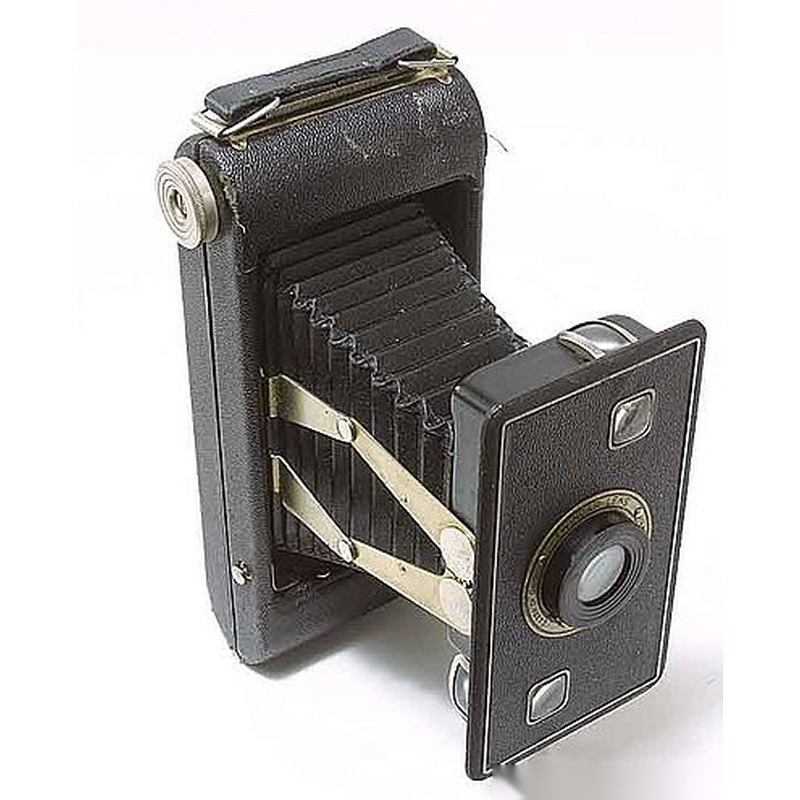
Kodak Folding Six-20 Brownie Model I
Kodak · USA · 1937–1940 (3 years) · 135 film
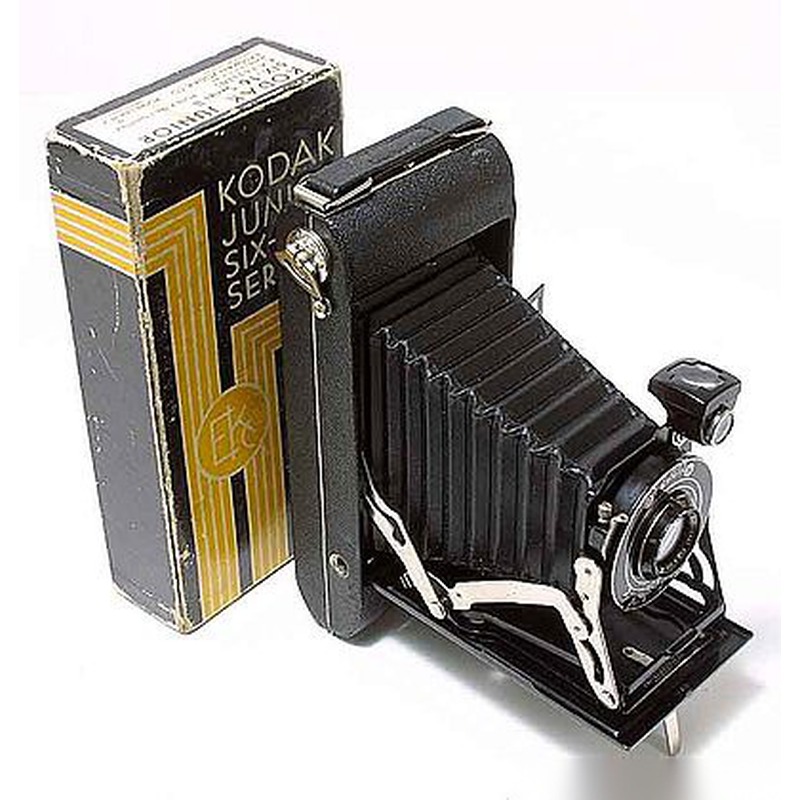
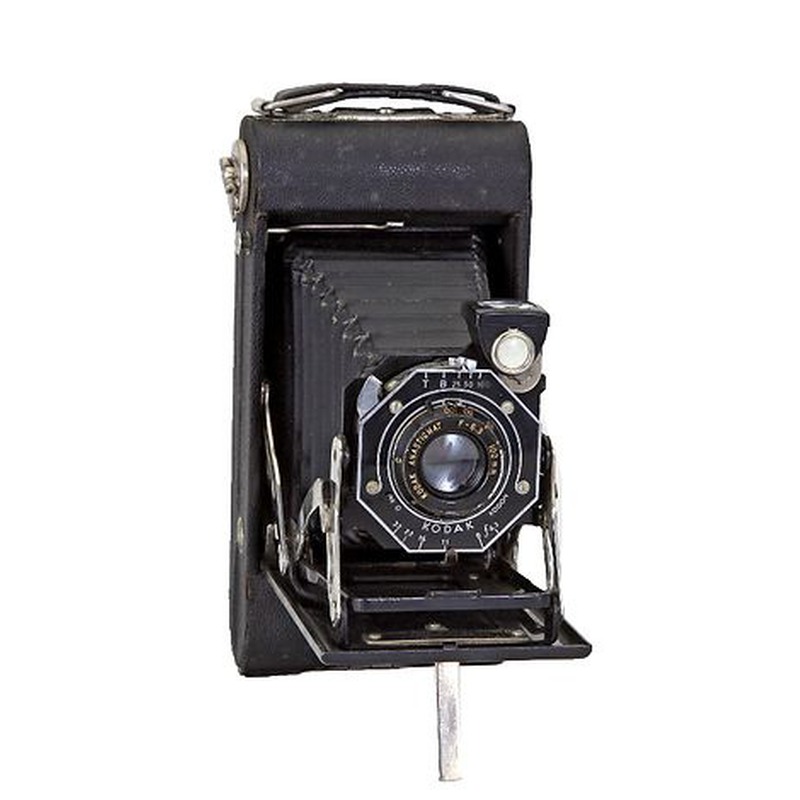
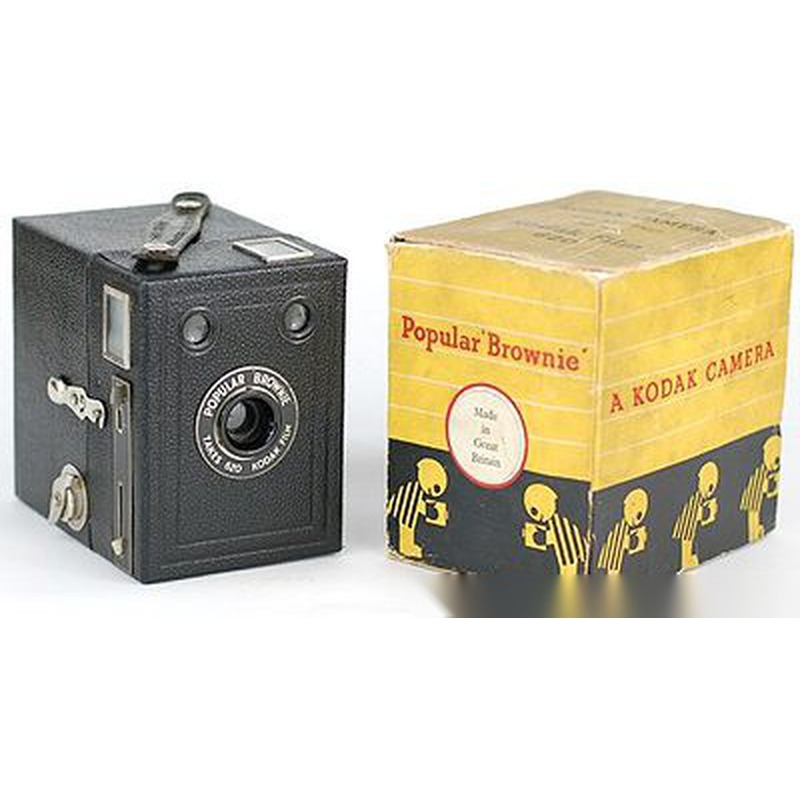
The Folding Six-20 Brownie Model I represents Kodak's approach to creating affordable, user-friendly cameras during the late 1930s. As a folding 35mm camera produced between 1937 and 1940, it exemplifies the period's transition toward more compact designs while maintaining the simplicity that defined the Brownie line. The camera features basic controls typical of its era, with a straightforward lens and shutter system designed to make photography accessible to amateur photographers. Its folding mechanism allowed for a more portable form factor compared to earlier box-style Brownies, making it easier to carry while still providing the familiar Kodak experience.
This camera existed alongside more sophisticated models during a time when photography was becoming increasingly popular yet remained somewhat specialized. The Brownie line, dating back to 1900, had already played a crucial role in democratizing photography, and this Model I continued that tradition with updated styling for the late 1930s market. While not technologically groundbreaking, it served as an entry point for many photographers during a significant period in photographic history, just as Kodak was refining its consumer camera lineup. The production timeframe of 1937-1940 also places it on the cusp of World War II, a period that would bring significant changes to manufacturing and consumer goods.
Specifications
| Film Format | 135 |
 Enjoy this museum? Support on Ko-fi