Pricing
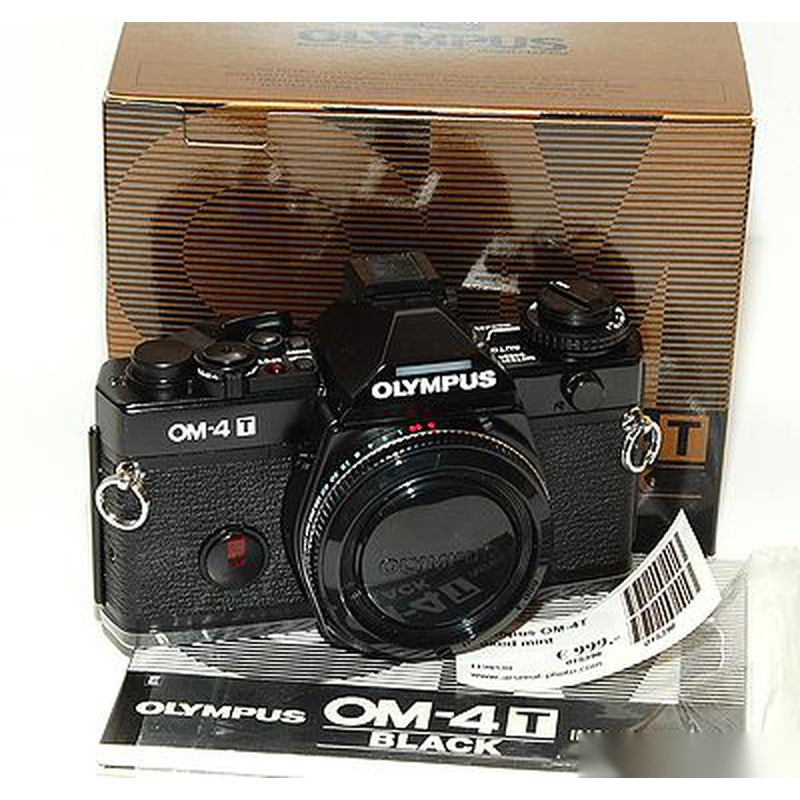
Olympus OM-4 T
Olympus · Japan
The Olympus OM-4 T, introduced in 1986 as an evolution of the flagship OM-4 model, represents a pinnacle of Olympus's engineering prowess in the 35mm SLR era. Building on the OM series' legacy of compactness and professional-grade construction, the OM-4 T was distinguished by its titanium top and bottom plates, which reduced weight while enhancing durability without compromising structural integrity. This model emerged from Olympus's fierce competition with brands like Nikon, aiming to appeal to photographers seeking a lighter alternative to bulkier professional bodies without sacrificing functionality. Its development was rooted in Olympus's commitment to refining the OM system launched in 1972 with the OM-1, which had already disrupted the market by prioritizing ergonomics and portability.
The OM-4 T's most groundbreaking innovation was its integrated 2% spot metering capability, allowing photographers to precisely measure light from tiny areas within the frame, a feature previously requiring external attachments. This was complemented by a revolutionary multi-spot metering system that could average up to eight spot readings, enabling sophisticated exposure calculations in challenging lighting conditions. Combined with Olympus's renowned TTL metering and a robust cloth focal-plane shutter with speeds from 1 to 1/1000 second plus bulb, the camera delivered unmatched exposure control for professionals. Its design emphasized manual override and tactile feedback, with a compact body that remained exceptionally sturdy despite its lightweight construction, making it a preferred tool for photojournalists and wildlife photographers like Art Wolfe, who valued its reliability in the field.
 Enjoy this museum? Support on Ko-fi