Pricing
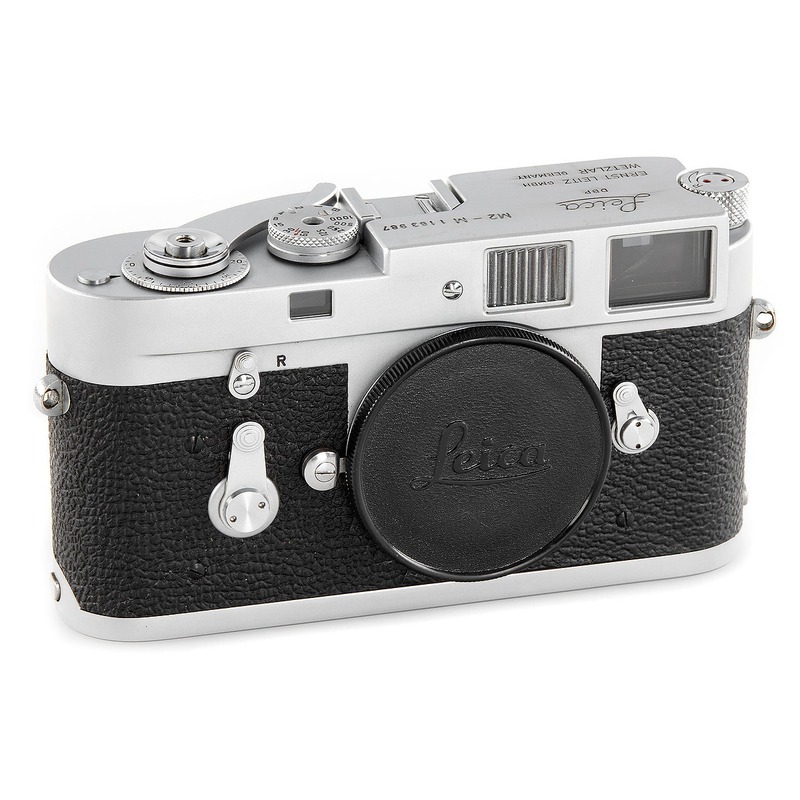
Leica M2-M
Leica · Germany · 1967 · 135 film
The Leica M2-M introduced in 1967 is a significant evolution of the original M2, representing Leica's response to the rise of Japanese competition and the need for a more accessible yet still prestigious rangefinder camera. Building upon the established M2 platform, the M2-M incorporated several key improvements over the earlier version most notably the adoption of the superior viewfinder and frameline system from the flagship M3. This provided brighter 0.72x magnification viewfinders with clearly defined framelines for 35mm, 50mm, 90mm, and 135mm lenses, significantly improving composition and focusing ease compared to the M2's simpler finder. Retaining the classic M-series rangefinder design with coupled rangefinder and interchangeable lens mount, the M2-M offered Leica's renowned precision build quality in a slightly more streamlined package. It became a favored tool among photojournalists, documentary photographers, and enthusiasts who valued the Leica experience but preferred a finder configuration better suited to common wide-angle and telephoto lenses than the M3's initial offerings.
While sharing the M2's robust all-metal construction and traditional controls, the M2-M solidified its place as a workhorse rangefinder bridge model. It maintained the M2's simpler frame counter and film loading compared to the M3, offering a more practical user experience for many while still embodying Leica's core values of optical excellence and mechanical reliability. Introduced later in the M2's production run (with 'M' suffix signifying the improved viewfinder), the M2-M represented Leica's commitment to refining their rangefinder line to meet diverse photographic demands within the competitive market of the late 1960s. It is less celebrated than the revolutionary M3 or the later M4, but remains a highly respected and functional instrument embodying the practical, utilitarian end of Leica's rangefinder heritage.
Specifications
| Film Format | 135 |
/main.jpg)
/main.jpg)
/main.jpg)
 Enjoy this museum? Support on Ko-fi