/main.jpg)
Pricing
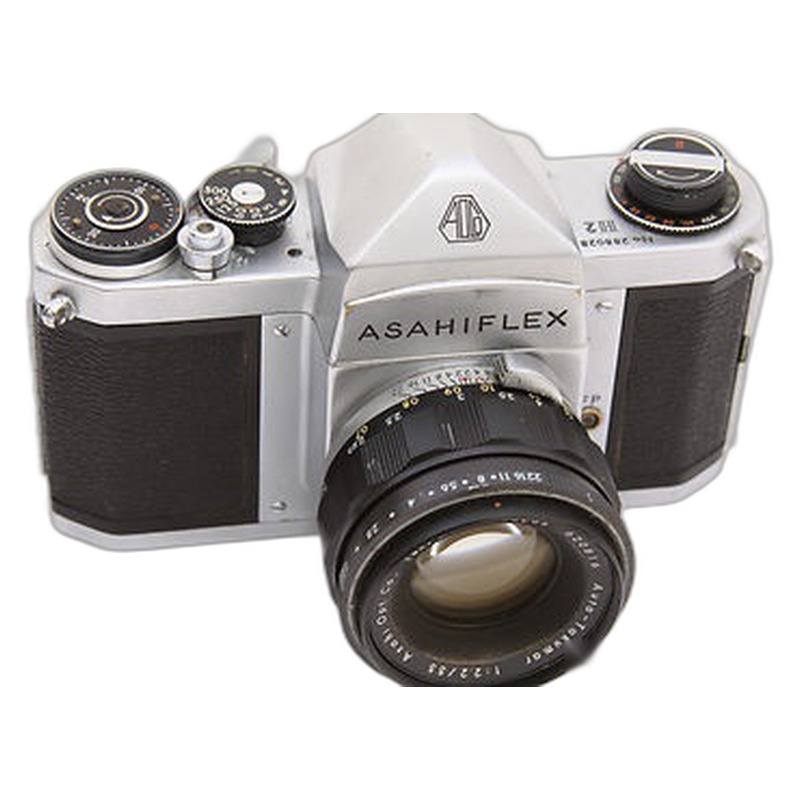
Pentax H2 (black)
Pentax · Japan · 1959–1965 (6 years) · 135 film
The Pentax H2 (black) is a 35mm single-lens reflex (SLR) camera representing a significant step forward for Pentax in the late 1950s and early 1960s. Part of the influential S-series, the H2 followed the successful H1 model, refining the design established by the earlier H series. It featured a robust, relatively compact body for its era, primarily constructed with aluminum and steel, offering good durability for a consumer-level SLR. The camera utilized a reliable focal plane shutter with speeds ranging from 1 second to 1/500th plus bulb, and incorporated a significant improvement in the form of an instant-return mirror. This innovation meant the mirror flipped back down immediately after exposure, allowing the photographer to see the image in the viewfinder continuously, unlike the manual reset mirrors on some earlier SLRs. While not introducing groundbreaking new technology, the H2 consolidated existing features like a reliable pentaprism viewfinder offering a correct, unreversed image, making the SLR format more practical and accessible for enthusiasts.
Produced continuously from 1959 until 1965, the black Pentax H2 was a workhorse camera that solidified Pentax's reputation for building reliable and well-designed SLRs. Its significance lies in its role within Pentax's evolution, bridging the gap between the revolutionary but somewhat finicky original Spotmatic prototype and the landmark Spotmatic released in 1964. The H2's instant-return mirror and robust build quality helped demonstrate the viability and convenience of the SLR design for a wider audience, contributing to Pentax's growth as a major camera manufacturer. It offered a practical, no-frills entry point into serious 35mm photography during a period when SLRs were rapidly gaining popularity over rangefinders, establishing a foundation for Pentax's later dominance in the SLR market.
Specifications
| Film Format | 135 |
/main.jpg)
/main.jpg)
/main.jpg)
/main.jpg)
 Enjoy this museum? Support on Ko-fi