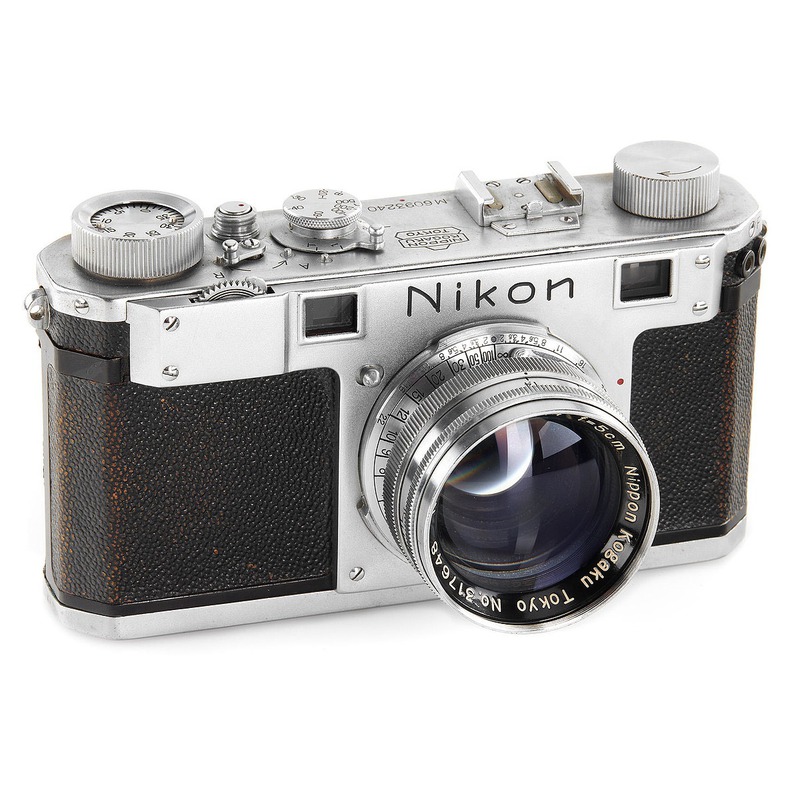
Nikon M
Nikon · Japan
The Nikon M represents a pivotal moment in Nikon's history as the company's first 35mm rangefinder camera, initially released as the Nikon I in 1947 and renamed Nikon M in 1948. Developed post-WWII, it was heavily inspired by German rangefinder cameras like the Leica IIIc, aiming to provide a reliable, precision-built camera to the Japanese market and eventually export. Key features included a coupled rangefinder system for accurate focusing, a focal plane shutter with speeds ranging from 1 second to 1/500 second, and interchangeable lenses starting with a 50mm f/3.5 Nikkor. Its build quality was robust for its time, featuring a metal body construction characteristic of the era. While not reaching the iconic status of later Nikon SLRs, the Nikon M was instrumental in establishing Nikon's reputation for optical excellence and mechanical reliability in the interchangeable lens camera market, paving the way for future innovations like the legendary Nikon F system.
Produced for only a few years until the Nikon S emerged in 1950, the Nikon M served as a crucial bridge between pre-war designs and Nikon's own evolving rangefinder line. It showcased Nikon's early mastery of precision mechanics and lens design, utilizing the superb Nikkor optics that would become a hallmark of the brand. Its introduction marked Nikon's entry into the competitive 35mm arena, demonstrating a commitment to quality that countered the perception of Japanese cameras as merely imitations. Although its design was derivative, the Nikon M's performance and reliability earned respect among photographers, contributing significantly to Nikon's growth as a major player in the global camera industry during the formative years of 35mm photography.
 Enjoy this museum? Support on Ko-fi