Pricing
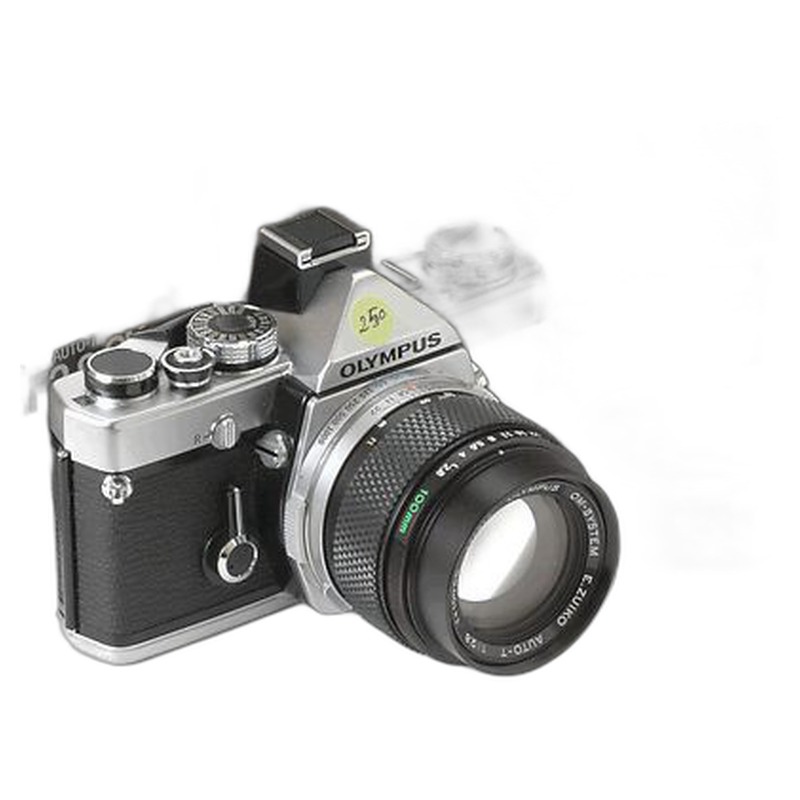
Olympus OM-1 n
Olympus · Japan
The Olympus OM-1 n represents a pinnacle of 1970s SLR design, evolving from the revolutionary OM-1 introduced in 1972. It was conceived to challenge the dominance of bulky professional SLRs, notably from Nikon and Canon, by delivering exceptional performance within a remarkably compact, lightweight magnesium alloy body. Designed by Yoshihisa Maitani and his team, its core innovations included a precision, titanium-tipped focal plane shutter capable of 1/1000 second sync flash (unmatched at launch), a bright, large viewfinder with 98% coverage, and a highly efficient metering system. The "n" designation signifies a minor revision, typically featuring a self-timer lever and possibly other minor refinements over the original OM-1, but it retained the legendary build quality and core design ethos that made the OM system famous. Its success stemmed from its combination of robust engineering, professional features, and unprecedented portability for an SLR of its era, appealing intensely to photojournalists, travel photographers, and discerning amateurs alike. Famous users included legendary photographers like Sebastião Salgado and numerous news photographers who valued its reliability and unobtrusive size in demanding situations.
The OM-1 n exemplifies the marriage of cutting-edge engineering and practical ergonomics. Its compact dimensions did not compromise handling; the camera felt substantial and balanced in the hand, with intuitive controls placed for easy access during shooting. The system's strength lay not just in the body but in the extensive range of high-quality Zuiko lenses, renowned for their sharpness and compactness, and robust accessories. This combination allowed photographers to build a versatile, portable, and professional-grade system. The OM-1 n's design philosophy fundamentally influenced subsequent generations of SLRs, demonstrating that professional performance did not necessitate excessive bulk. Its enduring legacy is cemented by its role in popularizing compact professional SLRs and establishing Olympus as a major force in the camera industry. It remains highly regarded by photographers and collectors today as a benchmark of 1970s camera engineering and design philosophy.
 Enjoy this museum? Support on Ko-fi