Pricing
Kodak Stereo Camera
Kodak · USA · 135 film
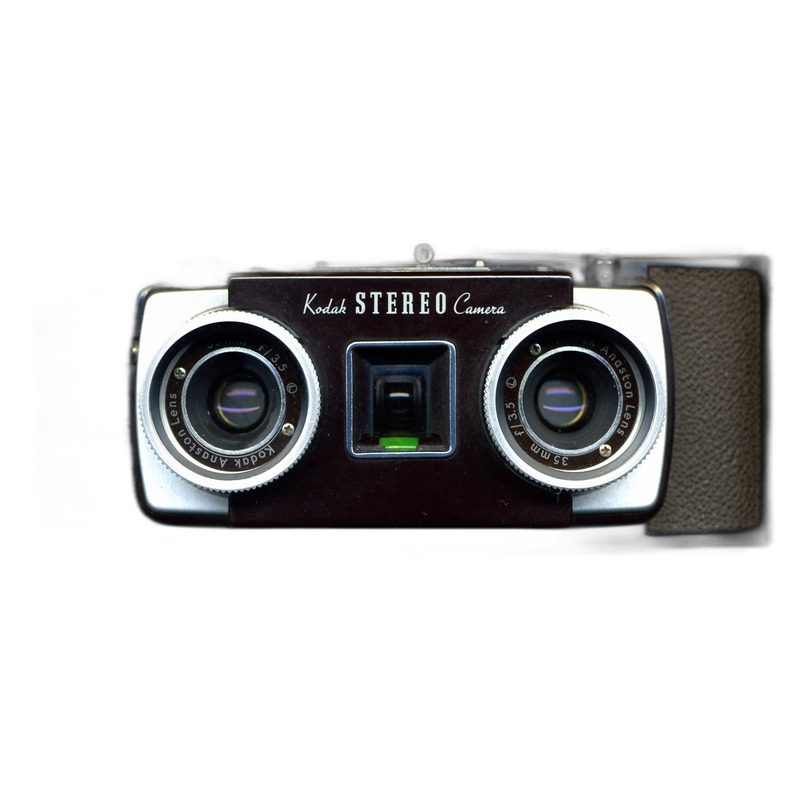
The Kodak Stereo Camera represents a significant entry by Kodak into the post-war stereoscopic photography market, directly challenging the established Stereo Realist. Produced between 1954 and 1959, it capitalized on the era's fascination with 3D imagery, offering consumers an accessible path to creating and viewing stereo slides. While fundamentally similar to the Stereo Realist in employing paired lenses to capture simultaneous images on 35mm film (135 format) for use in dedicated viewers, Kodak leveraged its massive brand recognition and distribution network. The camera likely shared the core mechanical principle of the Stereo Realist system, designed for simplicity and reliability in capturing the necessary parallax for stereo vision. Its design story underscores Kodak's strategy to dominate emerging consumer photography formats by providing a familiar, mass-produced alternative to specialized manufacturers.
Technically, the Kodak Stereo Camera offered key features for its time: both lenses supported adjustable apertures (allowing control over depth of field and exposure in each view) and variable shutter speeds (enabling greater flexibility in lighting conditions). This level of adjustability, standard on stereo cameras of the period, was crucial for achieving properly exposed stereo pairs under diverse circumstances. While not radically innovative in stereo mechanics, the camera's production quality and widespread availability by Kodak helped normalize stereoscopic photography as a mainstream hobby during the mid-1950s, solidifying its place as a popular, albeit niche, segment within the broader photographic landscape of the era. Documented use by prominent photographers is scarce in the provided information.
Specifications
| Type | Stereo |
| Film Format | 135 |
/main.jpg)
 Enjoy this museum? Support on Ko-fi