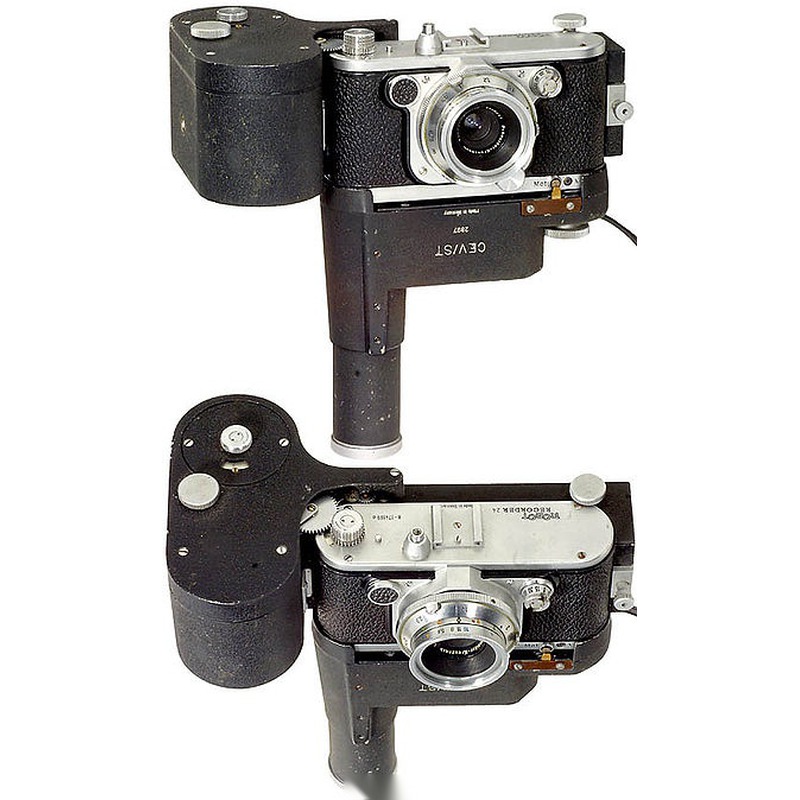
Berning Robot Robot Recorder 24M
Berning Robot · Germany
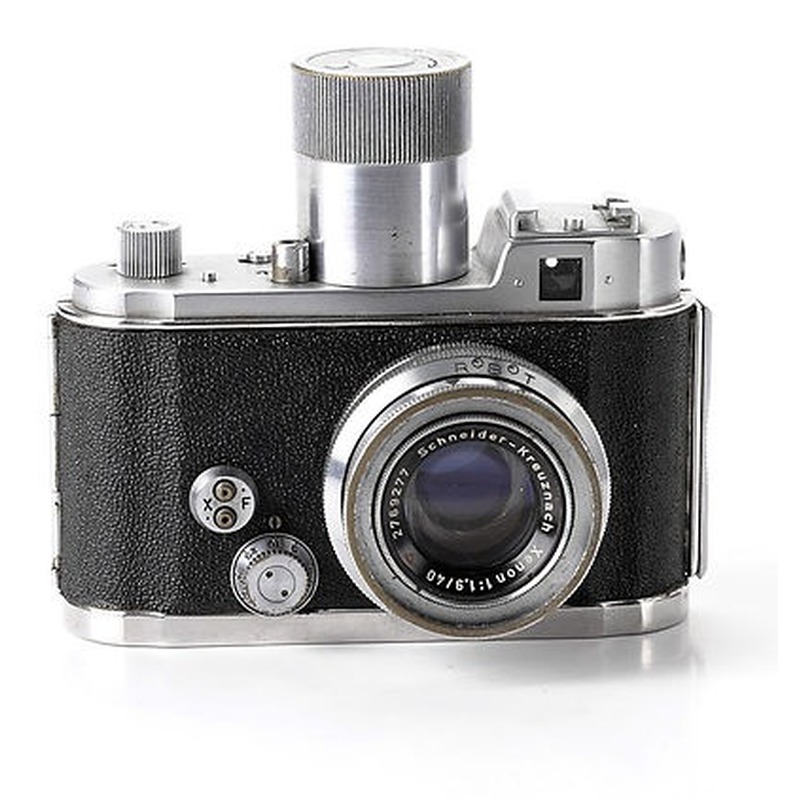
The Robot Recorder 24M, produced by the German company Berning Robot, represents a fascinating example of mid-20th-century innovation in camera design, particularly in the realm of motorization. Berning Robot was known for incorporating spring-wound motor drives into its cameras, allowing for rapid sequence shooting without manual wind – a feature placing it ahead of many contemporary models in terms of technical sophistication. While specific details about the Recorder 24M's format (likely 35mm given the Robot line's focus) and exact model type are lost to time, it shared the characteristic robust construction and distinct, often utilitarian aesthetic common to Robot cameras. The company's focus on high-speed motor drives suggests the Recorder 24M was designed for applications requiring quick capture, potentially scientific, industrial, or press photography where winding speed was a limiting factor for standard manual cameras.
As part of the Robot series, the Recorder 24M likely contributed to the lineage of motorized cameras that would later become standard in various professional fields. Berning Robot's designs, while perhaps achieving less mainstream fame than contemporaries like Leica or Nikon, were significant for their pioneering use of internal spring motors to achieve frame rates previously unattainable without cumbersome external mechanisms. The camera embodies a specific technological niche – a bridge between purely manual operation and the more sophisticated electric motors that would dominate later SLRs. Its existence highlights the diverse experimentation occurring within the camera industry during the mid-20th century, pushing boundaries beyond the dominant rangefinder and SL paradigms of the era.
/main.jpg)
/main.jpg)
 Enjoy this museum? Support on Ko-fi