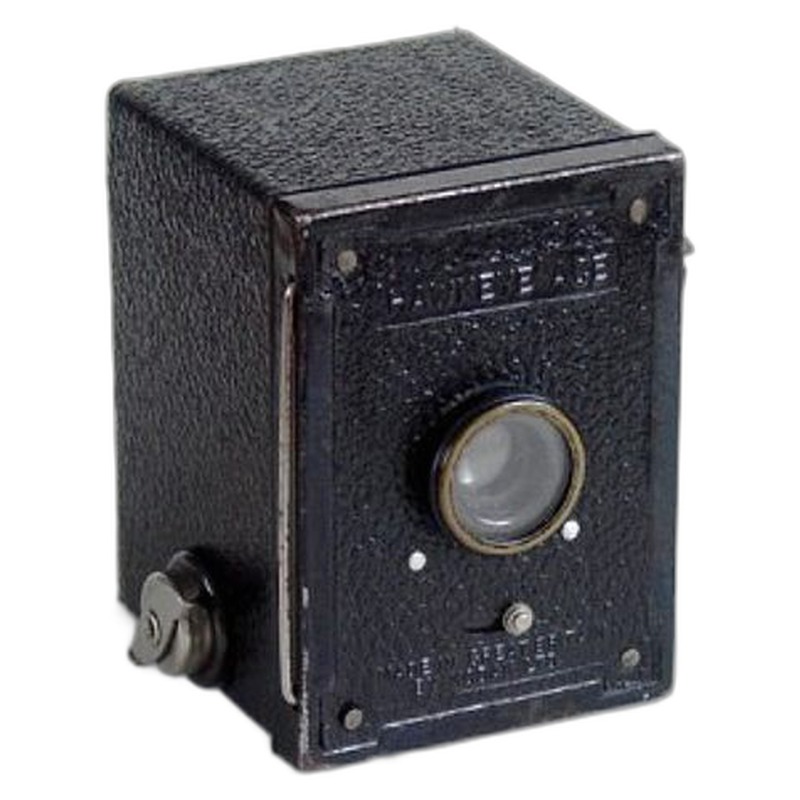
Kodak Hawk-Eye Ace
Kodak · USA · 1936 · 135 film
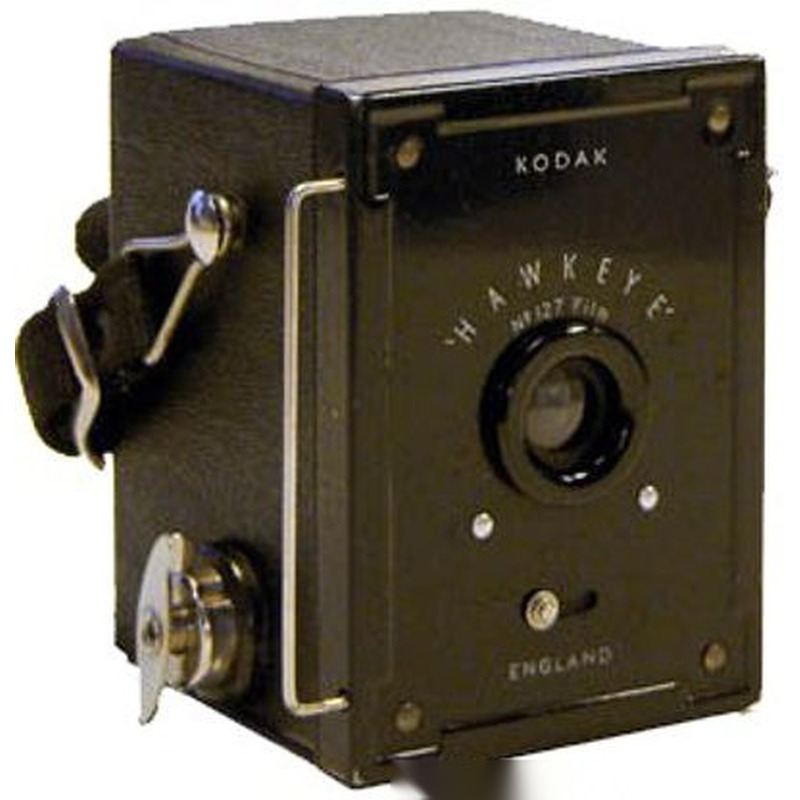
Introduced in 1936, the Kodak Hawk-Eye Ace holds a place as Kodak's first significant venture into the 35mm format market, targeting American photographers increasingly exposed to European miniature cameras. As part of Kodak's line of "Hawk-Eye" branded roll film cameras adapted for 135 cartridges, the Ace represented a strategic move by the American giant to compete with popular imports like the Leica. It featured a simple, boxy Bakelite body with a fixed-focus Kodak Anastigmat lens, a simple shutter (likely B, 1/25s, or 1/50s speeds), and basic viewfinder. Designed for affordability and ease of use, the Ace democratized 35mm photography for Kodak's vast consumer base, offering a straightforward point-and-shoot experience without the complexity or cost of rangefinder competitors. Its introduction cemented 135 film's viability for Kodak and helped accelerate its adoption in the United States beyond specialized niche use.
While not technologically innovative or aimed at professionals, the Hawk-Eye Ace's historical significance lies in its role as Kodak's flagship 35mm offering during a crucial period. It directly addressed the growing demand for compact cameras and provided a reliable, low-cost entry point into the miniature format for countless amateur photographers. Its production marked Kodak's formal commitment to the 35mm market, leveraging its massive distribution network to make the format more accessible. Its simple, utilitarian design exemplifies the "everyman's camera" philosophy of 1930s Kodak, prioritizing reliability and ease over advanced features.
Specifications
| Film Format | 135 |
/main.jpg)
/main.jpg)
 Enjoy this museum? Support on Ko-fi