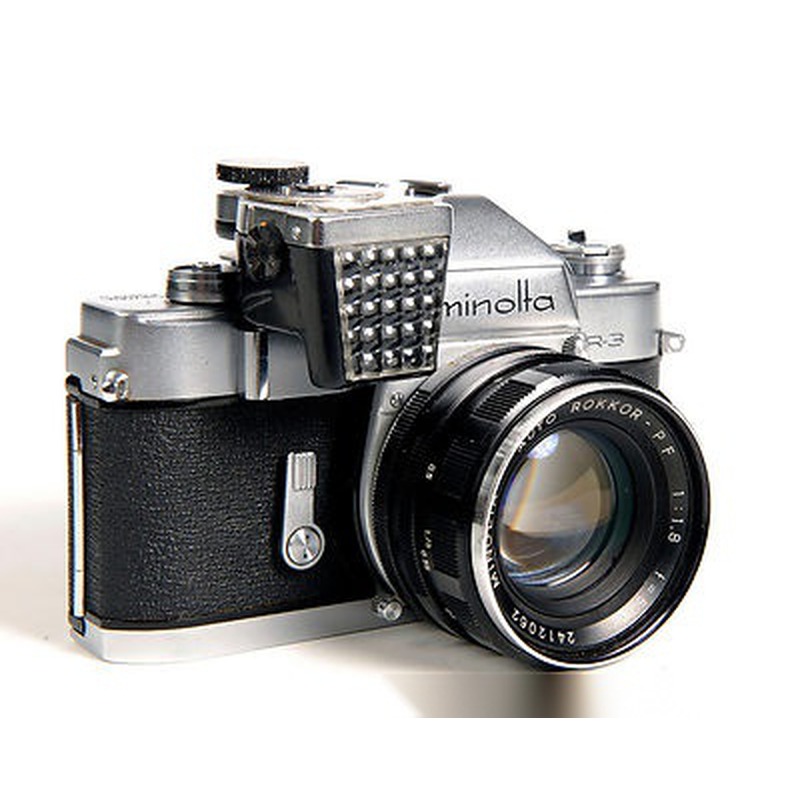
Minolta SR-3
Minolta · Japan
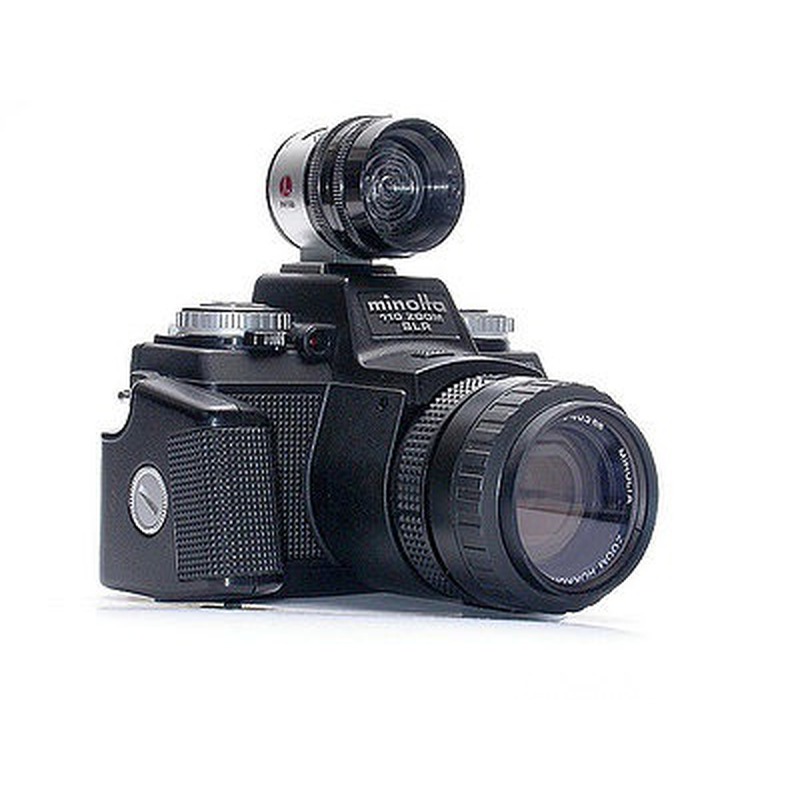
The Minolta SR-3 is an early 35mm single-lens reflex (SLR) camera introduced by Minolta in the late 1950s or early 1960s, part of their foundational SR series. It represents Minolta's transition into the competitive SLR market, featuring a sturdy construction with a cloth focal-plane shutter offering speeds from 1 to 1/1000 second, coupled selenium light meter for exposure assistance, and the industry-standard Minolta SR bayonet lens mount. Designed for enthusiasts and serious amateurs, the SR-3 prioritizes reliability over innovation, with a black enamel finish, top-mounted film advance lever, and simple controls typical of mid-century Japanese cameras. Its production period aligns with Minolta's establishment as a major player, bridging gap between their earlier rangefinders and later advanced models like the SR-T series.
While not groundbreaking, the SR-3 holds significance as a workhorse that exemplified Minolta's engineering ethos during a formative era. It competed with mid-range SLRs from Canon and Nikon, offering robust build quality at an accessible price point without the refinements of its successors. Today, it survives as a functional and unpretentious vintage camera, valued for its straightforward mechanics and role in documenting Minolta's evolution. Its anonymity in historical accounts reflects its status as a solid but unsung model—neither revolutionary nor rare, but representative of the practical SLRs that shaped post-war photography.
/main.jpg)
/main.jpg)
 Enjoy this museum? Support on Ko-fi