Pricing
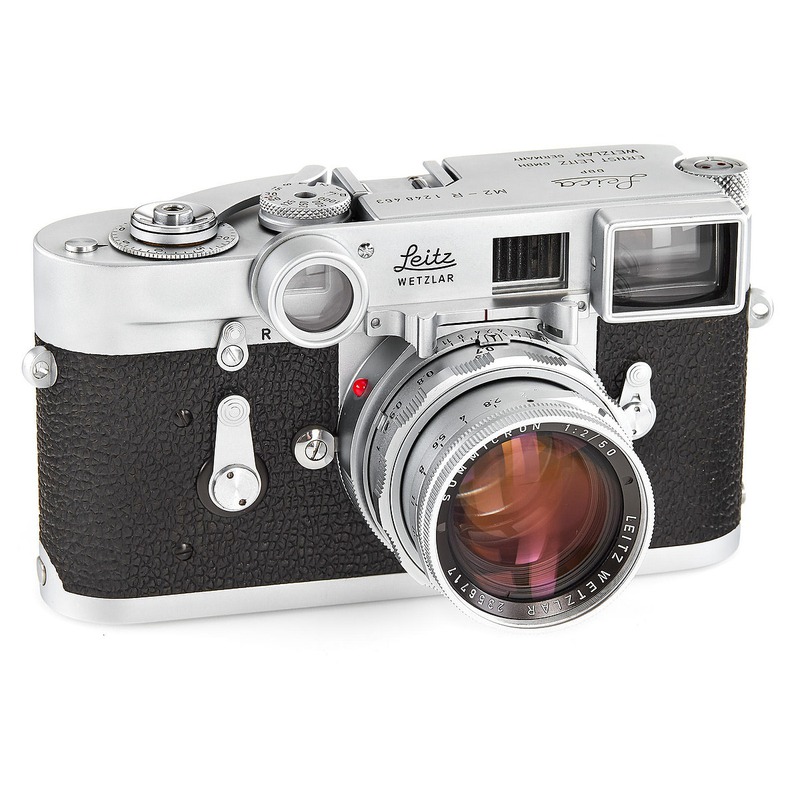
Leica M2-R
Leica · Germany · 1957–1967 (10 years) · 135 film
The Leica M2-R, manufactured from 1957 to 1967, stands as a practical and streamlined evolution of Leica's prestigious M-series rangefinder cameras. Designed as a more accessible alternative to the revolutionary M3, the M2-R addressed key usability limitations by reducing the rangefinder magnification to 0.72x, eliminating the M3's complex focal-length switching mechanism, and integrating viewfinder frames for 35mm, 50mm, and 90mm lenses directly into the finder window. This design enhancement significantly improved wide-angle photography convenience without requiring auxiliary attachments, making it particularly appealing to photojournalists and street photographers who valued unobtrusive operation and quick handling. Despite its simplification, the M2-R maintained Leica's renowned build quality with its cast brass body, precision-mechanized shutter, and compatibility with the M-mount lens system.
While never achieving the cult status of the M3, the M2-R gained widespread professional recognition for its reliability and functional minimalism. Its robust construction and vibration-free cloth focal-plane shutter enabled consistent performance in demanding environments, from conflict zones to street documentation. Esteemed photographers like Henri Cartier-Bresson utilized the M2-R for its optical excellence and discreet nature, allowing for candid moment capture without drawing attention. The camera's decade-long production run reflected its steady market acceptance among working photographers who required durability and precision without the premium cost or complexity of Leica's flagship models. The M2-R thus represents a significant chapter in Leica's development, bridging the gap between groundbreaking innovation and practical professional implementation.
Specifications
| Film Format | 135 |
/main.jpg)
/main.jpg)
/main.jpg)
 Enjoy this museum? Support on Ko-fi