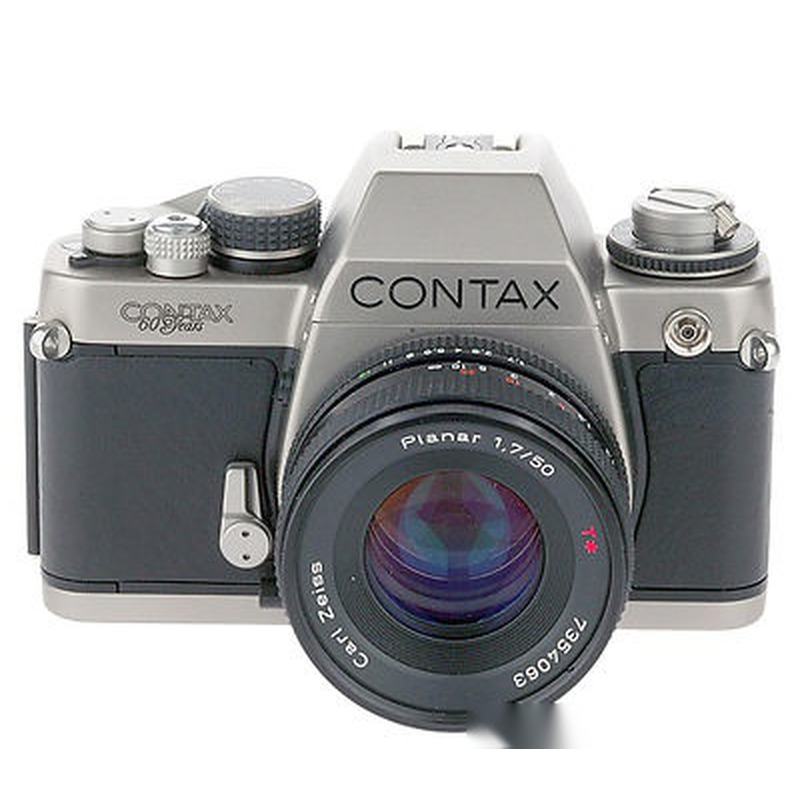
Yashica Contax S2 '60 Years'
Yashica · Japan · 1992 · 135 film
The Contax S2 '60 Years' is a special edition of the Contax S2, a 35mm SLR camera launched by Yashica in 1992 to commemorate Zeiss's 60 years of lens manufacturing. Building upon the earlier Contax S1, the S2 distinguished itself by incorporating an electronically controlled vertical-travel metal focal-plane shutter while retaining a fully mechanical shutter mechanism for the 1/2000s top speed and flash sync, a hybrid approach aimed at reliability and precision. It featured a robust, all-metal construction typical of Contax's commitment to quality, paired with the excellent Carl Zeiss lenses available for the system, though the camera body itself was Japanese-made. The S2 represented Yashica's ongoing effort to establish Contax as a premium alternative to Japanese SLR giants like Canon and Nikon, targeting photographers seeking German-lensed precision with a more accessible price point than contemporary Leica M cameras. The '60 Years' edition added aesthetic differentiation, likely featuring unique cosmetic details or engravings, emphasizing the prestigious Zeiss heritage.
While not achieving the legendary status of the Nikon F or Leica M3, the Contax S2 holds notable significance as a well-executed, technically interesting camera within the high-end 35mm SLR market of the early 1990s. Its hybrid shutter design was a practical solution offering the durability of mechanical systems with the convenience of electronic control, and it formed part of the Contax S series which, despite Yashica's financial struggles, maintained a dedicated following. The S2 '60 Years' variant, in particular, is valued by collectors as a tangible piece of the Zeiss-Contax collaboration history, representing the brand's push towards craftsmanship in an increasingly electronic camera landscape. It offered a compelling alternative for serious enthusiasts seeking manual focus performance with premium optics.
Specifications
| Film Format | 135 |
/main.jpg)
/main.jpg)
/main.jpg)
 Enjoy this museum? Support on Ko-fi