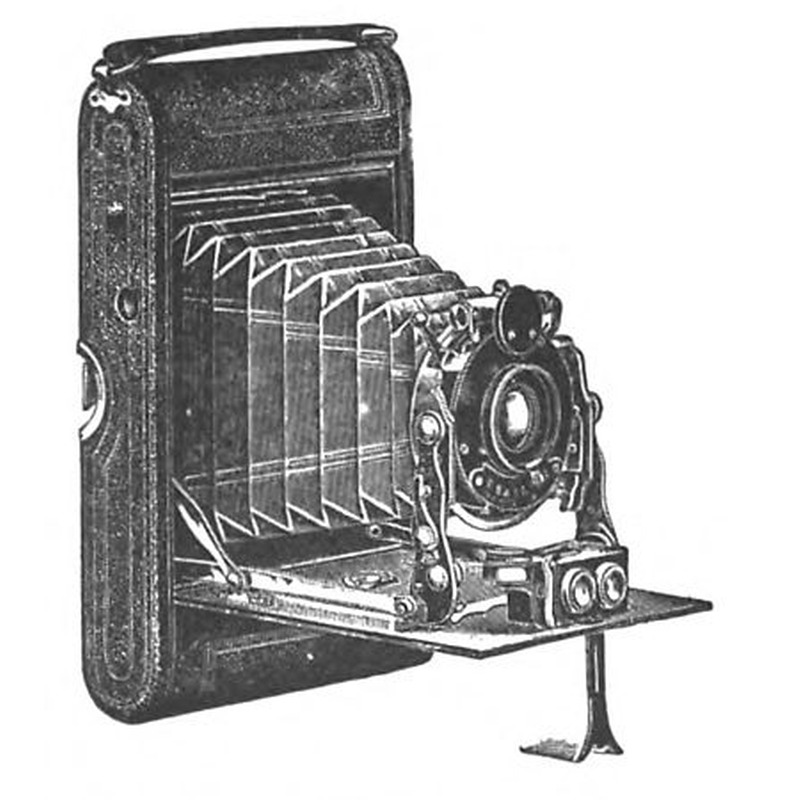
Houghton Ensign Selfix Carbine
Houghton · UK · 1908 · 135 film
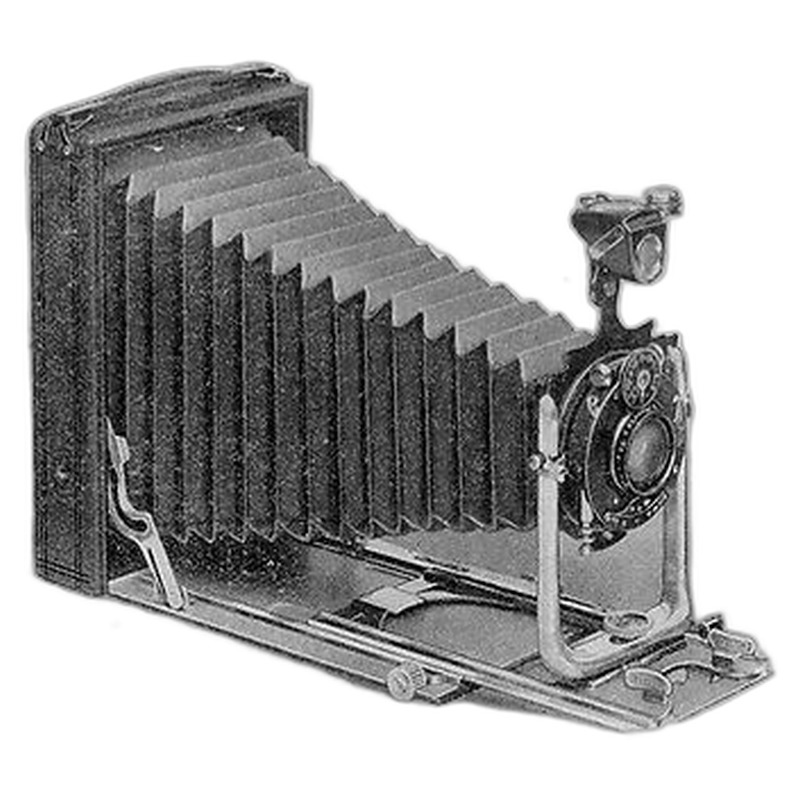
The Ensign Selfix Carbine represents a pivotal moment in photographic history as one of the earliest cameras to utilize the 135 format we now know as 35mm. Introduced by British optical manufacturer Houghton in 1908, this camera predates the legendary Leica I by 17 years, positioning it as a remarkable pioneer in small-format photography. At a time when most photography relied on larger glass plate or roll film formats, the Ensign Selfix Carbine demonstrated the potential of 35mm film for creating compact, portable cameras that could capture high-quality images. This experimental approach to the format would eventually revolutionize photography by enabling cameras to become smaller, more accessible, and ready for action.
The technical specifications of the Ensign Selfix Carbine reflect the experimental nature of early 35mm photography. While exact details are scarce, the 135 format designation confirms it used 35mm motion picture film, adapting it for still photography. This adaptation required engineers to develop new mechanisms for film transport, viewfinding, and exposure control. The Carbine model suggests a focus on portability and perhaps specialized use, possibly targeting the growing amateur photography market or specific professional applications. As one of the first cameras to popularize what would become the dominant format for most of the 20th century, the Ensign Selfix Carbine deserves recognition not only for its technical innovations but for helping to set the stage for the small-format photography revolution that would follow decades later.
Specifications
| Film Format | 135 |
/main.jpg)
/main.jpg)
 Enjoy this museum? Support on Ko-fi