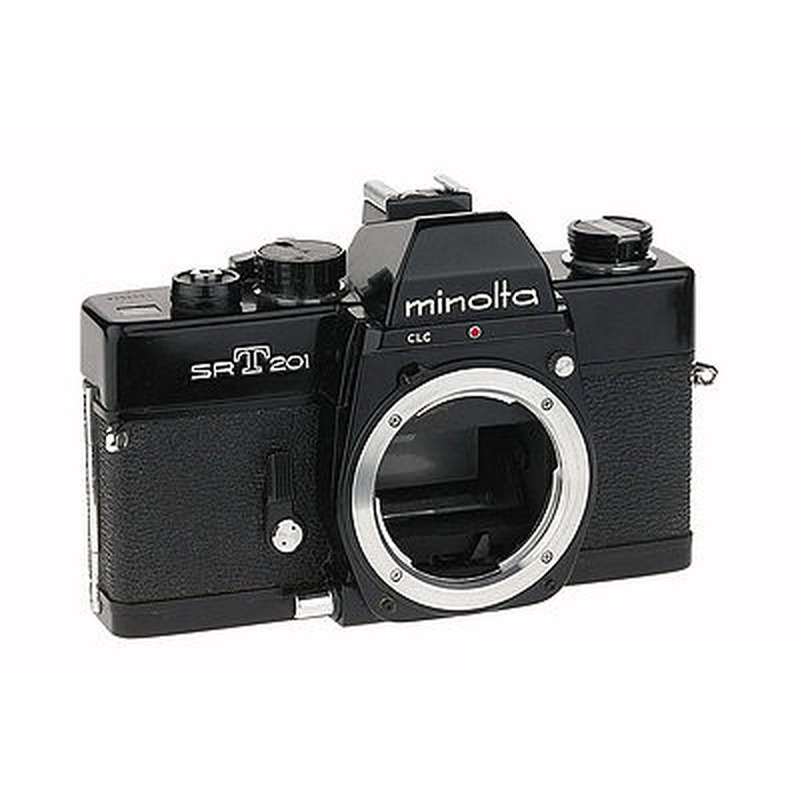
Minolta SRT-201
Minolta · Japan
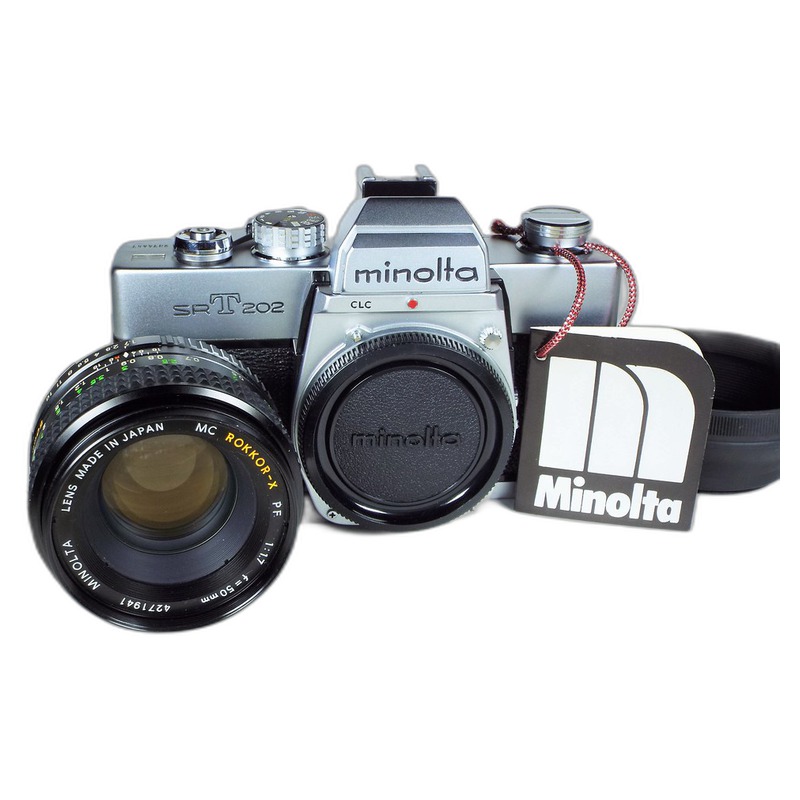
The Minolta SRT-201 is a 35mm single-lens reflex camera introduced in the early 1970s as part of Minolta's successful SRT series. Building upon the foundation of the SRT-101, the SRT-201 offered photographers a robust, feature-rich SLR at an accessible price point. Notable for its through-the-lens (TTL) full-aperture metering system, which allowed for accurate exposure readings regardless of the lens aperture, the SRT-201 featured Minolta's renowned CLC (Contrast Light Compensation) metering system that helped photographers achieve proper exposure in challenging lighting conditions. The camera incorporated a vertical-travel metal focal-plane shutter with speeds ranging from 1 second to 1/1000th, plus B, and offered a bright image in the viewfinder with a split-image rangefinder focusing aid and microprisms for precise focusing. The SRT-201 was popular among photography enthusiasts as a reliable workhorse that provided many features of professional cameras at a fraction of the cost.
Positioned between Minolta's more basic models and their professional-level XG series, the SRT-201 represented the sweet spot for serious amateur photographers in the 1970s photography market. Its durable metal construction, intuitive controls, and compatibility with Minolta's extensive MC lens mount system made it a practical choice for those seeking a capable SLR without the premium cost of top-tier brands. The camera's success contributed to Minolta's reputation for producing quality photographic equipment, though it ultimately operated in the shadow of Canon's AE-1 program which became the market leader during this era. Despite its relative anonymity compared to some contemporaries, the SRT-201 remains respected among collectors for its solid engineering and the excellent optical quality of the lenses designed for its mount.

/main.jpg)
/main.jpg)
 Enjoy this museum? Support on Ko-fi