Pricing
Kodak Ektra
Kodak · USA · 1941–1948 (7 years) · 135 film
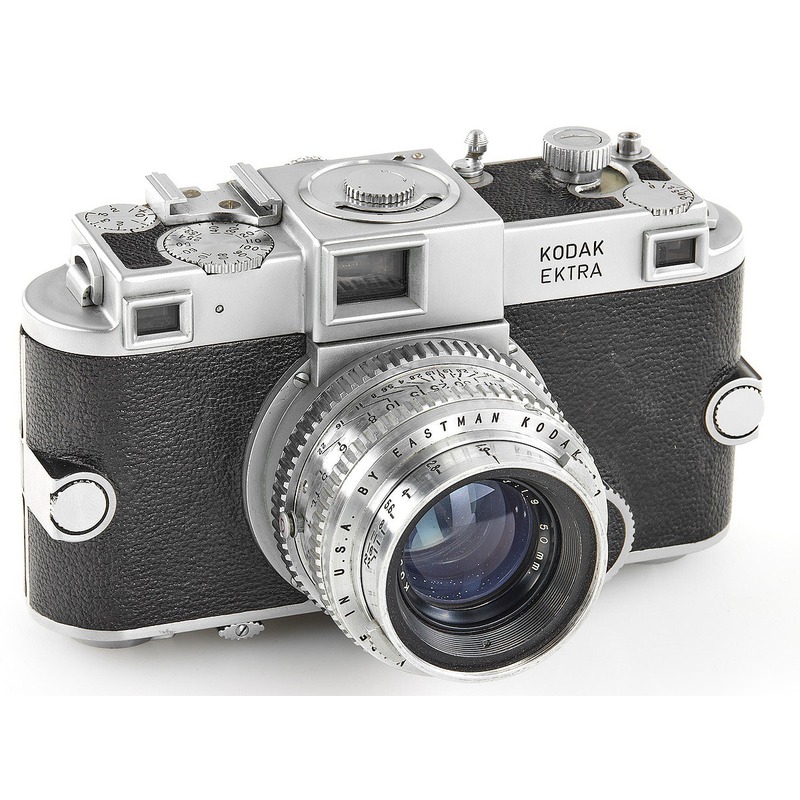
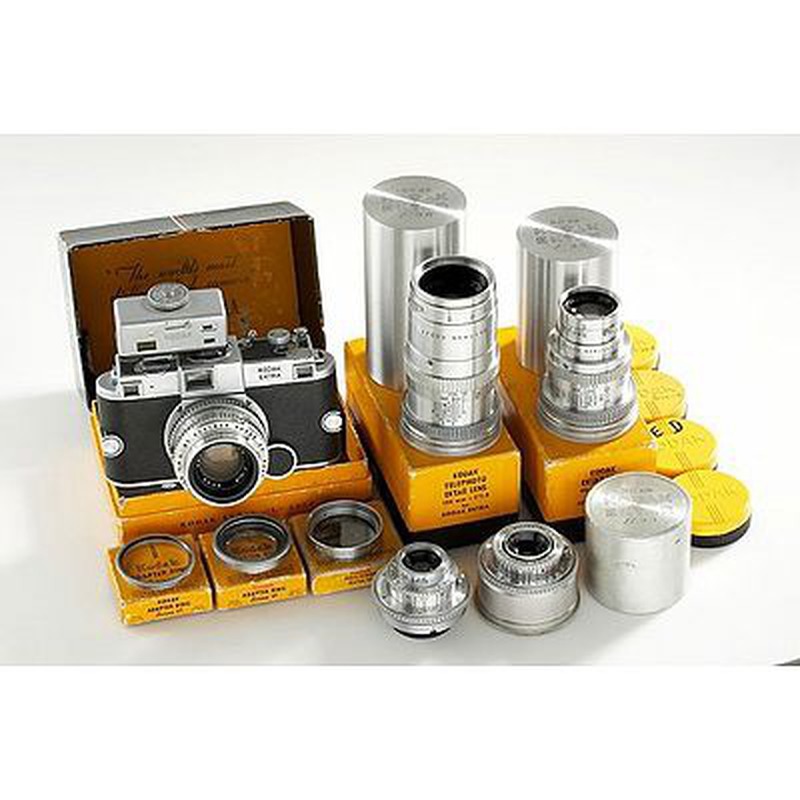
The Kodak Ektra stands as an interesting entry into the 35mm rangefinder market from a company more typically associated with consumer roll film cameras. Introduced in 1941 as Kodak's attempt to compete with European precision cameras, the Ektra offered versatility by covering both the highpoint and lowpoint of 35mm operation, suggesting it could handle a wide range of photographic situations from high-speed work to precision composition. The camera featured coupled rangefinder focusing, which was becoming standard for quality cameras of this era, and represented Kodak's serious effort to establish itself in the growing 35mm market. However, the Ektra's reputation was marred by issues with its shutter mechanism, which proved unreliable and plagued the camera's performance despite its promising design concept. Produced during a tumultuous period that included most of World War II (1941-1948), the Ektra's manufacturing likely faced wartime constraints that may have contributed to its technical shortcomings. While it didn't achieve the legendary status of contemporary European rangefinders, the Ektra represents an important chapter in Kodak's camera history and American attempts to compete in the premium 35mm segment.
Though innovative in concept, the Ektra's practical impact was limited by its technical flaws. The faulty shutter became its defining characteristic, overshadowing what might have otherwise been a competitive offering from one of photography's most prominent manufacturers. Today, surviving Ektra cameras are prized by collectors as examples of American camera manufacturing during the mid-20th century, though their operational issues make them more historical artifacts than practical photographic tools. The camera serves as a reminder that even established companies can stumble when entering new market segments, especially during challenging production years like those of the early 1940s.
Specifications
| Film Format | 135 |
/main.jpg)
/main.jpg)
 Enjoy this museum? Support on Ko-fi