Pricing
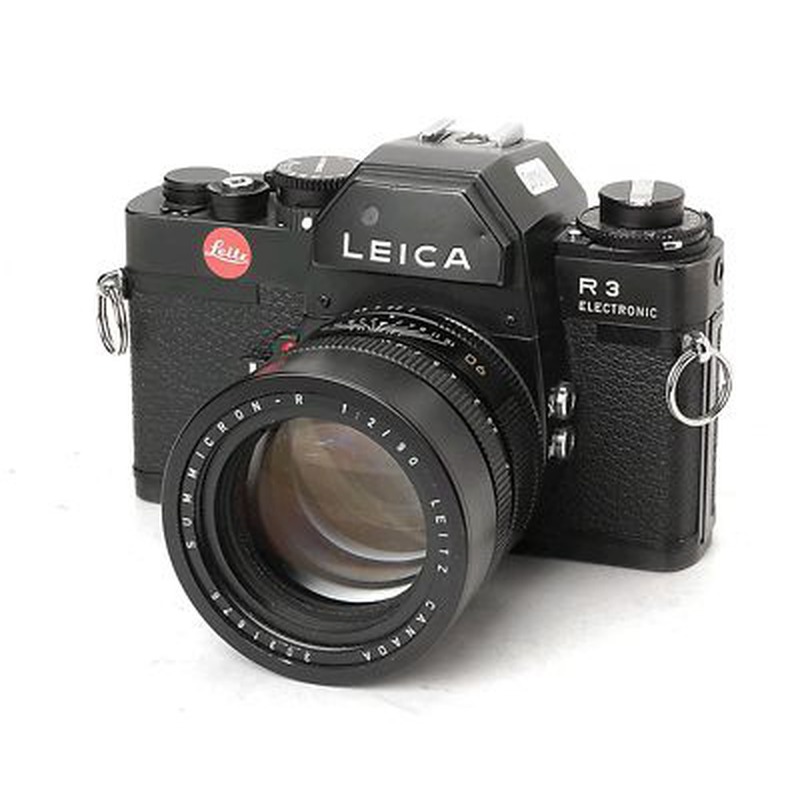
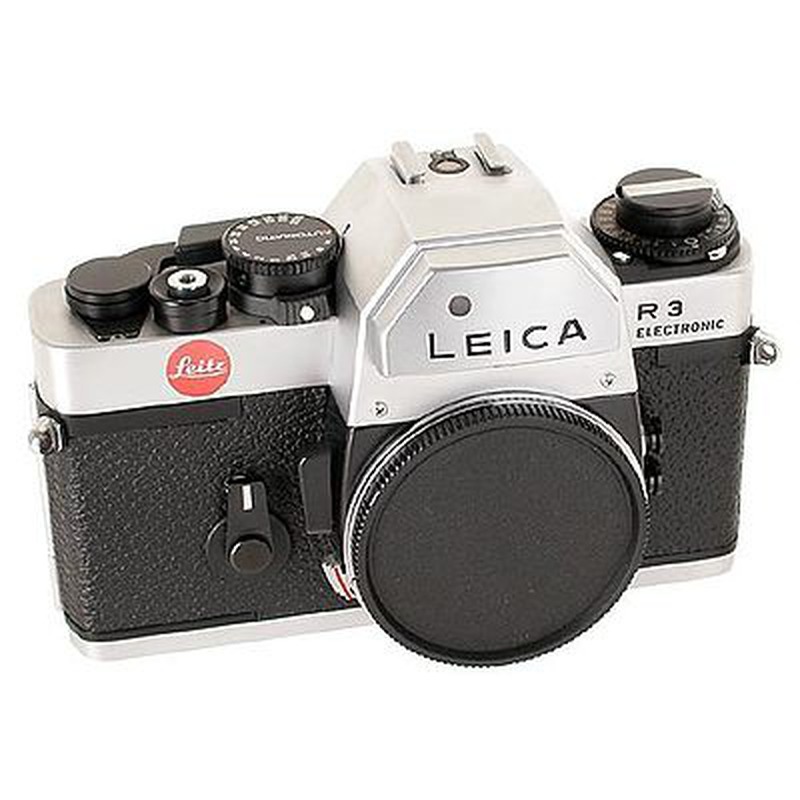
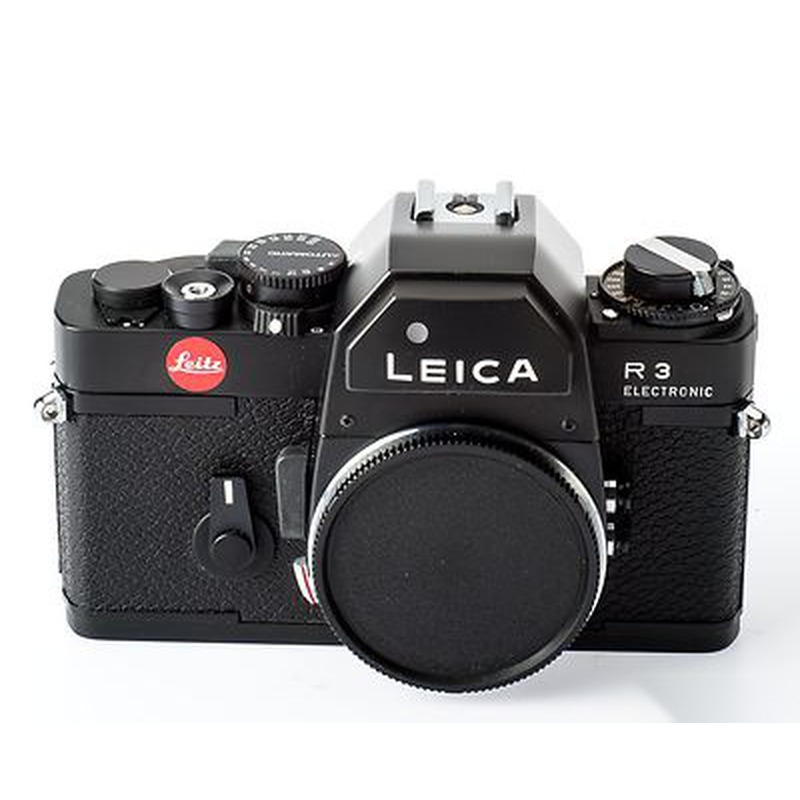
Leica R3 black
Leica · Germany · 1976–1979 (3 years) · 135 film
The Leica R3 black represents a significant transition point for the brand in the SLR market. Introduced in 1976 as Leica's first camera with an electronically controlled focal-plane shutter, it marked a departure from the purely mechanical systems of earlier models like the Leicaflex series. The R3 was developed in collaboration with Minolta, utilizing the latter's expertise in electronic camera systems while incorporating Leica's renowned R-lens bayonet mount and optical quality. This collaboration aimed to modernize Leica's offering in the increasingly competitive 35mm SLR arena, providing users with an aperture-priority automatic exposure mode alongside full manual control, along with a stop-down metering system. Its build quality, featuring a robust die-cast metal body, aligned with Leica's premium reputation for durability and precision engineering.
Positioned alongside the mechanically similar Leica R3 MOT (motorized), the R3 offered a versatile and reliable platform for Leica R lens users during its production run from 1976 to 1979. While not achieving the iconic status of the Leica M series or the groundbreaking influence of models like the Nikon F, the R3 holds importance as a bridge between Leica's traditional SLR past and its electronically enhanced future. It demonstrated Leica's commitment to technological adaptation within the SLR format, utilizing reliable electronics while maintaining compatibility with the existing R lens system and upholding the brand's characteristic tactile user experience and solid construction. Its historical significance lies more in its role as a pivotal, transitional product within Leica's own SLR evolution rather than a landmark camera that fundamentally shaped the wider photographic landscape.
Specifications
| Film Format | 135 |
/main.jpg)
/main.jpg)
/main.jpg)
/main.jpg)
 Enjoy this museum? Support on Ko-fi