Pricing
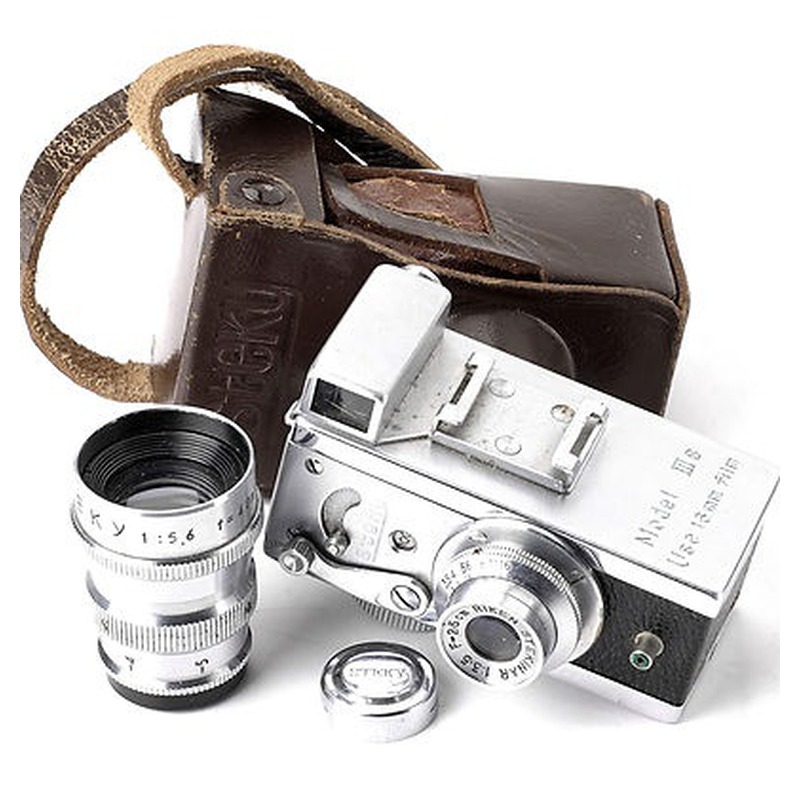
Riken Steky IIIb
Riken · Japan
The Steky IIIb is a Japanese subminiature camera produced by Riken Kōki (later Ricoh) during the mid-20th century, representing a practical approach to ultra-compact photography. It utilizes 16mm film, capturing 17.5x17mm images in a cartridge system, designed to rival imported subminiatures like the Minox. The camera features a simple fixed-focus lens, typically around 25mm f/3.5, and a basic shutter speed range (1/50s to 1/1000s), emphasizing portability over technical sophistication. Its metal body and viewfinder-based operation align with Riken’s goal of providing an accessible, pocket-sized camera for casual users during Japan’s post-war camera boom, bridging the gap between novelty and utility.
As a mid-tier subminiature, the Steky IIIb prioritizes discretion and ease of use over professional capabilities. Its mechanical reliability and modest film capacity (typically 20 exposures) suited personal snapshots, though it lacks the precision or cult status of more iconic subminiatures. The model emerged alongside similar Japanese efforts (like the Minebara), reflecting a domestic push to democratize compact photography without innovating radically—a functional snapshot camera of its era with distinct 1950s-1960s industrial design cues.
/main.jpg)
 Enjoy this museum? Support on Ko-fi