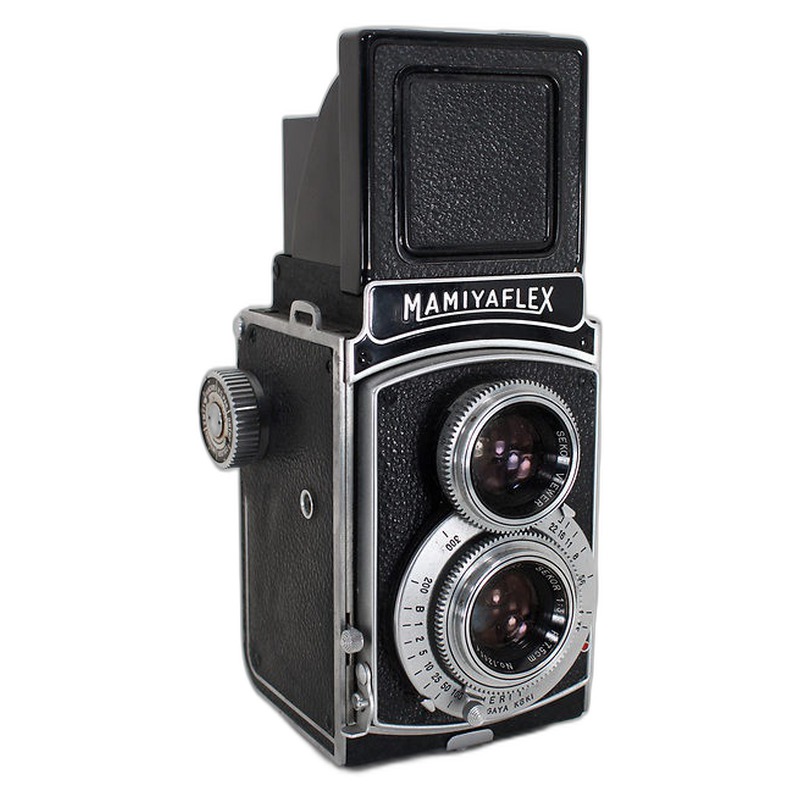
Mamiyaflex II
Mamiya · Japan · 1952
The Mamiyaflex II represents Mamiya's progression in the competitive twin-lens reflex market following their initial model from 1950. This medium format camera featured the characteristic TLR design with two matched lenses—one for viewing and one for taking photographs—mounted on a front standard that moved for focusing. Utilizing 120 roll film, it produced 6×6 cm exposures that appealed to portrait and documentary photographers. The Mamiyaflex II addressed criticisms of the original Mamiyaflex with improved focusing mechanisms and brighter viewfinders, positioning itself as a more affordable alternative to European TLRs while maintaining professional quality standards.
As Japan reestablished itself in the global camera market after World War II, cameras like the Mamiyaflex II helped demonstrate Japanese manufacturing capabilities. The camera's reliable performance and solid construction made it a practical tool for photojournalists and studio photographers throughout the 1950s. While not achieving the legendary status of some European competitors, the Mamiyaflex series contributed significantly to Mamiya's reputation for quality, paving the way for their later iconic single-lens reflex cameras. This model exemplifies the Japanese approach of refining and improving upon established designs rather than introducing revolutionary technology.
/main.jpg)
/main.jpg)
/main.jpg)
 Enjoy this museum? Support on Ko-fi