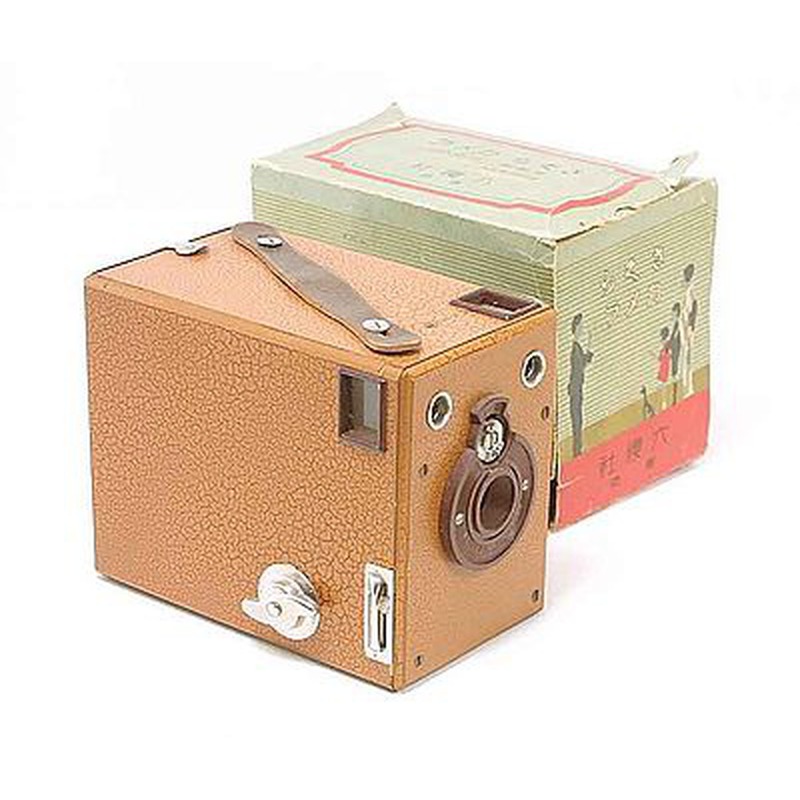
Konica Sakura Box
Konica · Japan · 1931 · 135 film
The Sakura Box introduced by Konica in 1931 stands as an early and noteworthy Japanese contribution to the burgeoning 35mm camera market. As one of the first domestic attempts to adopt the 135 film format then gaining traction in Europe, particularly through Leica, it represented Konica's strategic push into small-format photography. The camera likely featured a simple, box-like construction characteristic of entry-level models of the era, with a fixed lens and basic shutter controls designed for affordability and ease of use. Its release in 1931 placed Konica among the pioneers of Japanese 35mm manufacturing, reflecting a significant step in the country's broader emergence as a camera industry leader.
While not revolutionary in design, the Sakura Box holds historical context as an accessible entry point for photographers transitioning to 35mm film. It offered a practical solution for hobbyists seeking the portability and cost efficiency of smaller formats over bulkier roll-film cameras. As an early Konica product, it contributed to the company’s technical evolution, laying groundwork for more advanced models like the later Sakura and Konica series. Its significance lies primarily in its role within the narrative of Japanese camera development rather than in any groundbreaking innovations or widespread acclaim.
Specifications
| Film Format | 135 |

/main.jpg)
/main.jpg)
 Enjoy this museum? Support on Ko-fi