Pricing
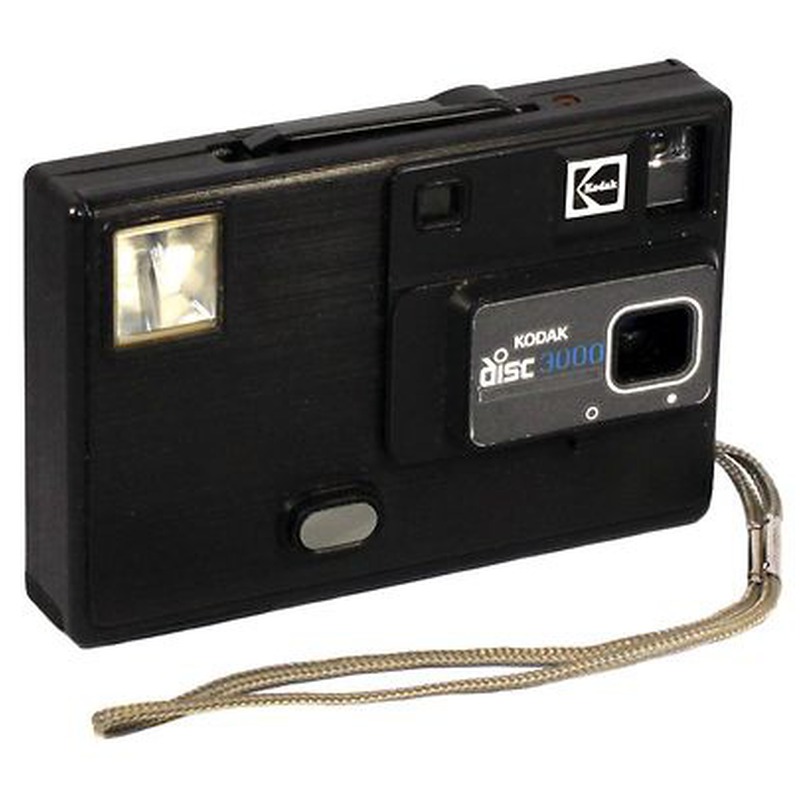
Kodak Disc 3000
Kodak · USA · 1983–1984 (1 years) · Disc film
The Kodak Disc 3000, produced briefly in 1983-1984, was part of Kodak's ambitious but ultimately short-lived venture into disc film photography. It utilized a small, flat circular film cassette holding 15 exposure negatives measuring a mere 10×8mm, significantly smaller than standard 35mm film. This format enabled an extremely simple, drop-in loading mechanism aimed at making film changes foolproof for casual users. The camera itself featured a fixed-focus, single-element lens and a basic shutter, typically offering a single aperture and a few shutter speeds, emphasizing point-and-shoot convenience over image quality or photographic control. Its compact, rounded plastic body, resembling a small disc or puck, was characteristic of the series, designed for portability and ease of use above all else. While representing an interesting technological detour in Kodak's history to simplify camera operation and film handling, the Disc 3000 suffered from the inherent limitations of its format: extremely small negatives resulting in grainy, low-resolution images, and a very short lifespan in the market as consumers quickly moved back to more practical formats like 35mm compact cameras.
Disc cameras like the 3000 filled a niche for ultra-simple snapshot photography at a time when Kodak dominated the consumer market, but their technical compromises and the discontinuation of the disc film format shortly after relegated them to a footnote. The Disc 3000 exemplifies a specific period in camera design where maximum ease of use was prioritized over optical performance and flexibility, ultimately failing to gain lasting traction or significant innovation beyond its film handling convenience.
Specifications
| Film Format | Disc |
 Enjoy this museum? Support on Ko-fi