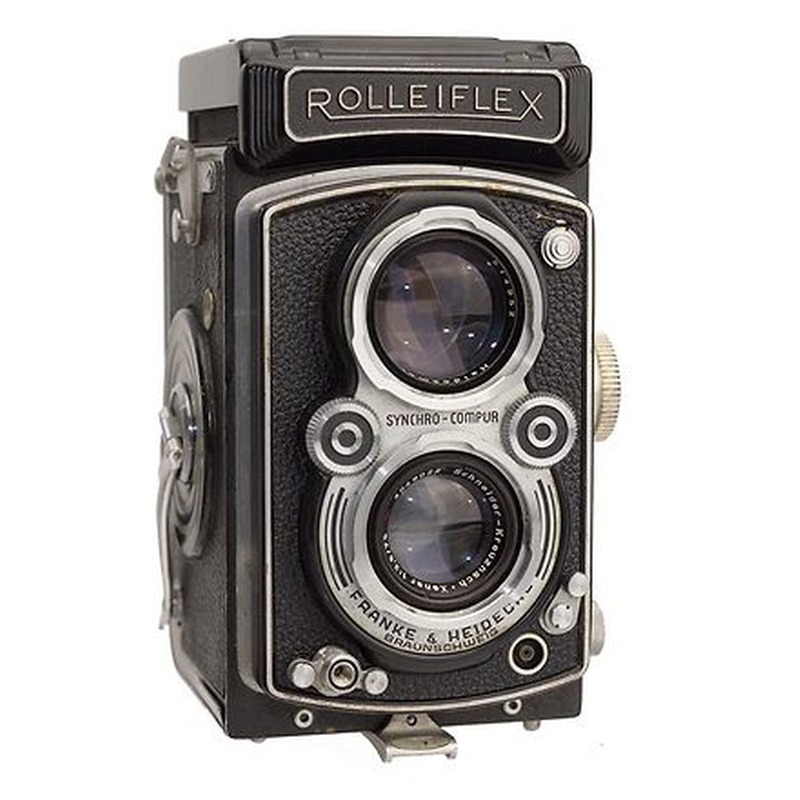
Rolleiflex 3.5 A
Rollei · Germany · 1951–1954 (3 years) · 120 film
The Rolleiflex 3.5 A represents a refined iteration within Rollei's esteemed line of twin-lens reflex cameras during the early 1950s. Building upon the established success of the preceding 3.5 F model, the 3.5 A retained the robust, all-metal body construction characteristic of the Rolleiflex name, renowned for its exceptional build quality and precision engineering. It utilized the iconic 75mm Planar or Tessar lens, depending on the specific variant, delivering the sharpness and contrast expected from Rollei's optical offerings. The camera operated via a crank-wind mechanism with an integrated film counter and a bright, ground-glass focusing screen, providing a stable and intuitive shooting experience for professional and serious amateur photographers working with 120 roll film. Its production period of 1951-1954 places it firmly within the post-WWII era when Rollei was solidifying its reputation for high-quality medium format equipment.
While sharing core design principles with its predecessors and successors, the 3.5 A served as a dependable workhorse. It offered the essential features of a professional TLR: waist-level viewing, reflex viewing for precise composition, and the reliable double-exposure prevention. It occupied a position slightly below the top-tier 3.5 F models, often incorporating minor cosmetic or functional refinements compared to earlier Rolleiflexes but maintaining the core engineering excellence. The 3.5 A contributed to Rollei's widespread adoption by photojournalists, portraitists, and studio photographers who valued the TLR format's quiet operation, portability, and the unique eye-level perspective it facilitated through its waist-level finder.
Specifications
| Film Format | 120 |
_(Type_1)/main.jpg)
/main.jpg)
/main.jpg)
/main.jpg)
/main.jpg)
/main.jpg)
 Enjoy this museum? Support on Ko-fi