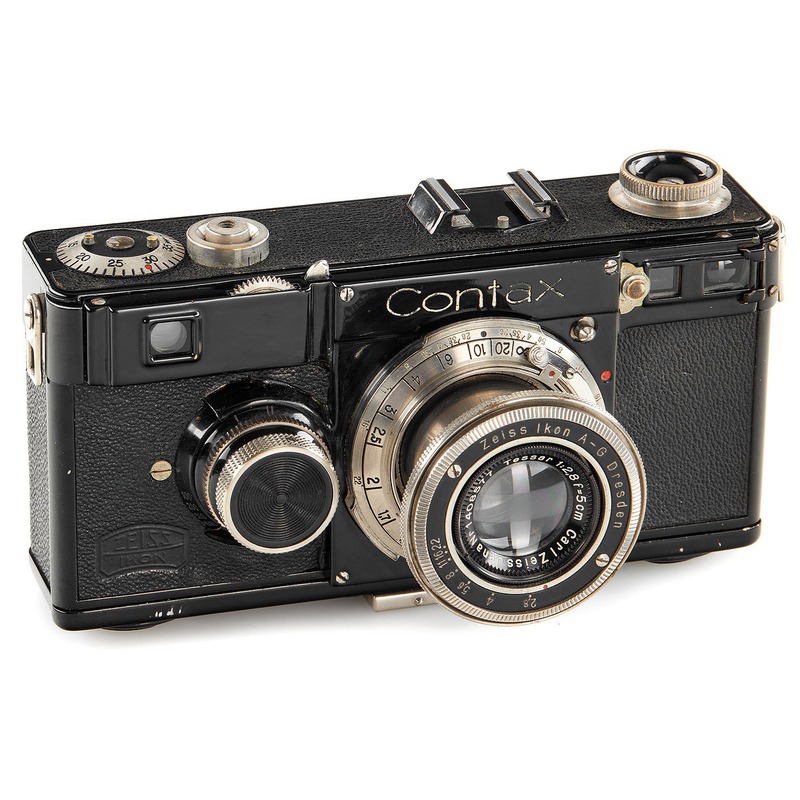
Zeiss Contax I b
Zeiss · Germany
The Contax I b represents Zeiss Ikon's ambitious challenge to Leica dominance in the high-end 35mm rangefinder market during the mid-1930s. As a refinement of the original Contax I (launched 1932), the "b" variant likely incorporated minor improvements or standardizations, continuing the line's core identity as a technologically sophisticated alternative to its German rival. Zeiss engineers focused on delivering superior specifications, notably a robust vertically-traveling metal focal-plane shutter offering higher top speeds (up to 1/1000s) than contemporary Leicas, alongside precision ground-glass focusing screens and a complex interchangeable lens system renowned for its optical quality. Contax I cameras featured a distinctive angular design compared to Leica's smoother forms and gained a reputation among professionals for their handling and precision, though complexity sometimes presented maintenance challenges. This camera was a key player in the "Camera Wars" of the era, cementing Zeiss Ikon's technical prowess and directly influencing subsequent high-end rangefinder development.
While sharing the core rangefinder platform, the Contax I b's specific improvements over the initial model are less documented. It maintained the line's commitment to high build quality and advanced features, appealing to photographers seeking something beyond the Leica standard. Its legacy lies in being a formidable competitor and a showcase of Zeiss optical and mechanical engineering during a pivotal period in 35mm photography, contributing significantly to the technological evolution of the small format camera before wartime disruptions shifted production and priorities.
/main.jpg)
/main.jpg)
/main.jpg)
 Enjoy this museum? Support on Ko-fi