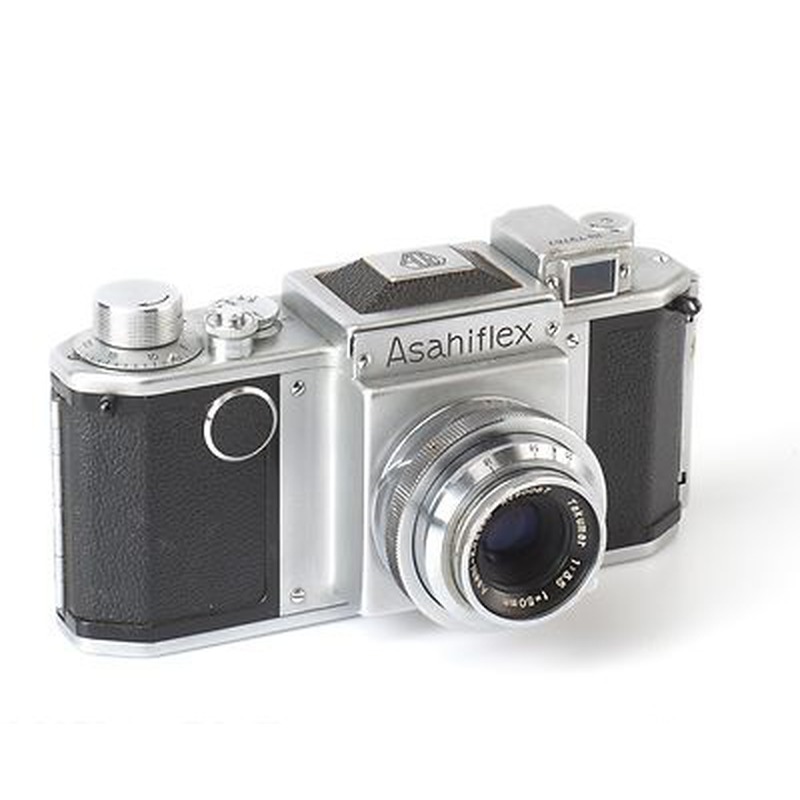
Pentax Asahiflex IIB
Pentax · Japan
The Asahiflex IIB represents an important milestone in the development of Japanese SLR cameras, marking an evolution in Pentax's early line of reflex cameras. Following the original Asahiflex model from 1952, the IIB featured improvements that helped establish Pentax's reputation in the competitive camera market of the 1950s. As a focal-plane shutter SLR, it allowed photographers to view the scene exactly as it would be captured through the lens, representing a significant advancement over earlier viewfinder cameras. The IIB incorporated several features that would become standard in SLRs, including a pentaprism viewfinder (in later models) and the ability to interchange lenses.
This camera was part of Pentax's push to establish Japan as a serious competitor to European camera manufacturers. While not as technologically groundbreaking as some later models, the Asahiflex IIB demonstrated Japanese engineering capabilities at a time when the country was rebuilding its manufacturing base after World War II. Its design and functionality helped pave the way for Pentax's eventual rise to becoming one of the world's most respected camera manufacturers. The IIB's production quality and user-friendly interface made SLR photography more accessible to enthusiasts and professionals alike during a transformative period in photographic history.
 Enjoy this museum? Support on Ko-fi