Pricing
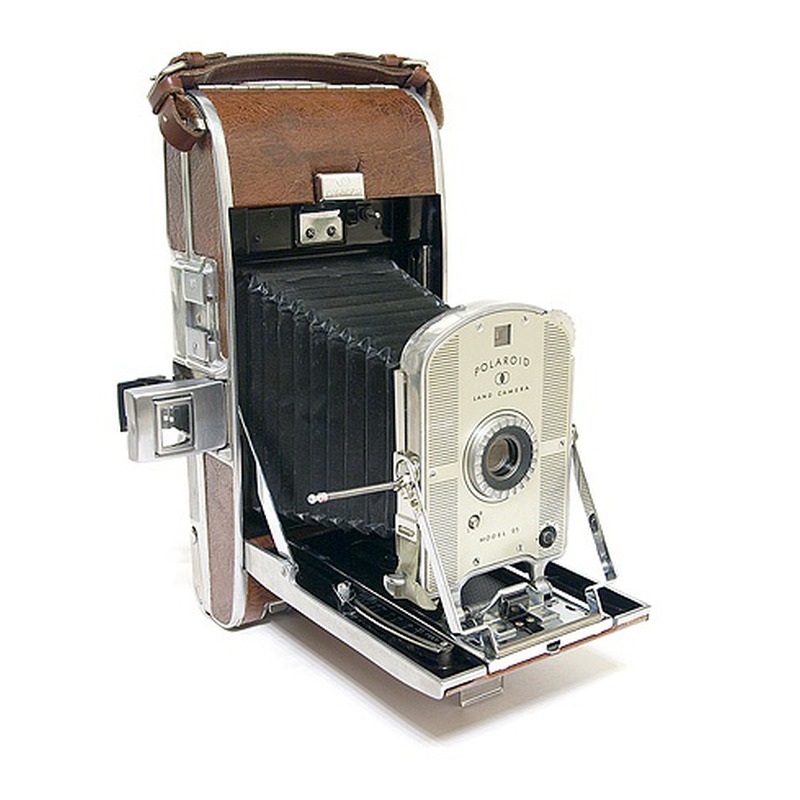
Polaroid 95
Polaroid · USA · 1948–1953 (5 years) · Instant film
The Polaroid 95, introduced in 1948, stands as the pivotal commercial success that truly launched instant photography into the mainstream consumer market. Following Edwin Land's groundbreaking but complex and expensive 40-series Land Cameras, the 95 was a pragmatic refinement, designed to be more affordable and user-friendly while retaining the revolutionary peel-apart film technology that defined Polaroid's early offerings. Its distinctive folding design protected the lens and bellows in a compact, metal-bodied case, making it relatively portable for its era. This model provided the crucial accessibility that made instant photography a tangible reality for countless families and amateur photographers, moving beyond novelty to become a household staple during its production run until 1953. It embodied the core Polaroid promise: see your picture moments after taking it.
The camera's significance lies in its role as the first truly popular instant camera. While the 40-series proved the technical feasibility of instant film, the 95's simplified operation, more robust construction, and lower price point were key to its widespread adoption. It featured a simple viewfinder, fixed-focus lens, and a rudimentary shutter speed selector, focusing on delivering instant results reliably. The 95 popularized the entire concept of "instant" gratification in photography, fundamentally altering how people captured and shared memories. Its influence permeated culture and paved the way for the vast array of subsequent Polaroid models, including the iconic SX-70 decades later, establishing the instant camera as a dominant photographic category. It remains a landmark product representing the birth of mass-market instant imaging.
Specifications
| Film Format | Instant |
/main.jpg)
/main.jpg)
/main.jpg)
/main.jpg)
 Enjoy this museum? Support on Ko-fi