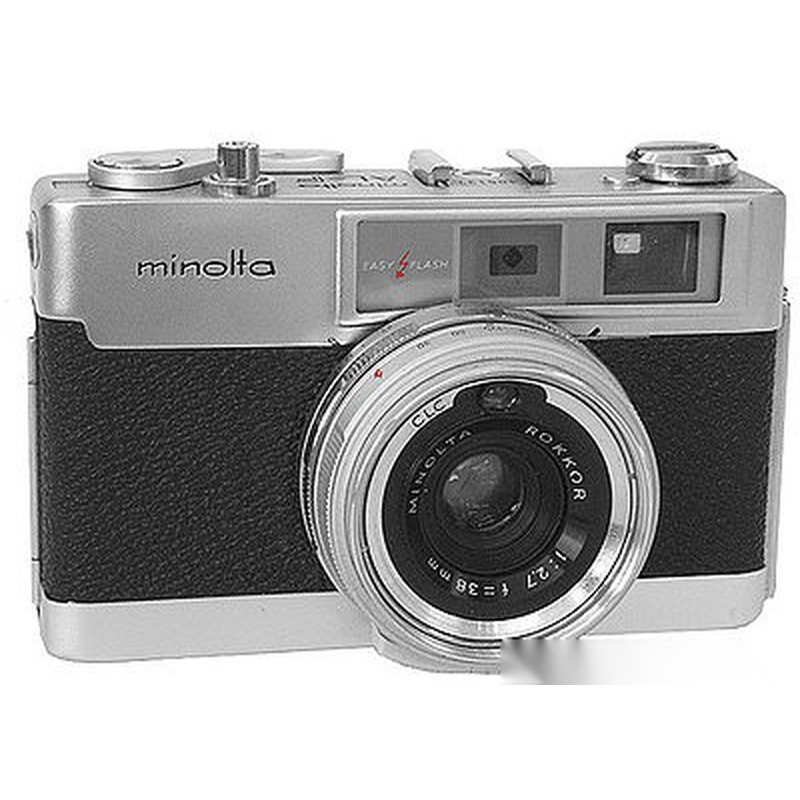
Minolta AL F
Minolta · Japan
Launched in 1967, the Minolta AL-F was a significant step forward for the company in the consumer rangefinder market. It was one of Minolta's first attempts to integrate automatic exposure control into their popular 35mm rangefinder line, building upon their successful predecessors like the Hi-Matic series. The AL-F featured a coupled rangefinder for precise focusing and an automatic exposure system utilizing a CdS (Cadmium Sulfide) light meter. This meter calculated the correct shutter speed and aperture combination automatically, simplifying operation for photographers moving from simpler manual models. While retaining the compact, handheld form factor characteristic of rangefinders, the AL-F represented Minolta's push towards greater automation before the widespread adoption of single-lens reflex (SLR) systems with similar features dominated the market. It was a practical, well-engineered camera designed for everyday photography enthusiasts seeking reliable automatic exposure in a familiar package.
As an automatic 35mm rangefinder, the AL-F filled a specific niche. It offered a user-friendly shooting experience with its automatic exposure, eliminating the need for manual exposure metering and adjustment. Its construction, typical of mid-20th-century Japanese cameras, used die-cast metal bodies and quality glass lenses, ensuring durability for consumer-grade equipment. While not groundbreaking in overall design or image quality compared to contemporary SLRs or the high-end Leica rangefinders, it was a competent and popular model that demonstrated Minolta's technical capabilities and understanding of the evolving demands of amateur photographers in the late 1960s.
/main.jpg)
/main.jpg)
 Enjoy this museum? Support on Ko-fi