Pricing
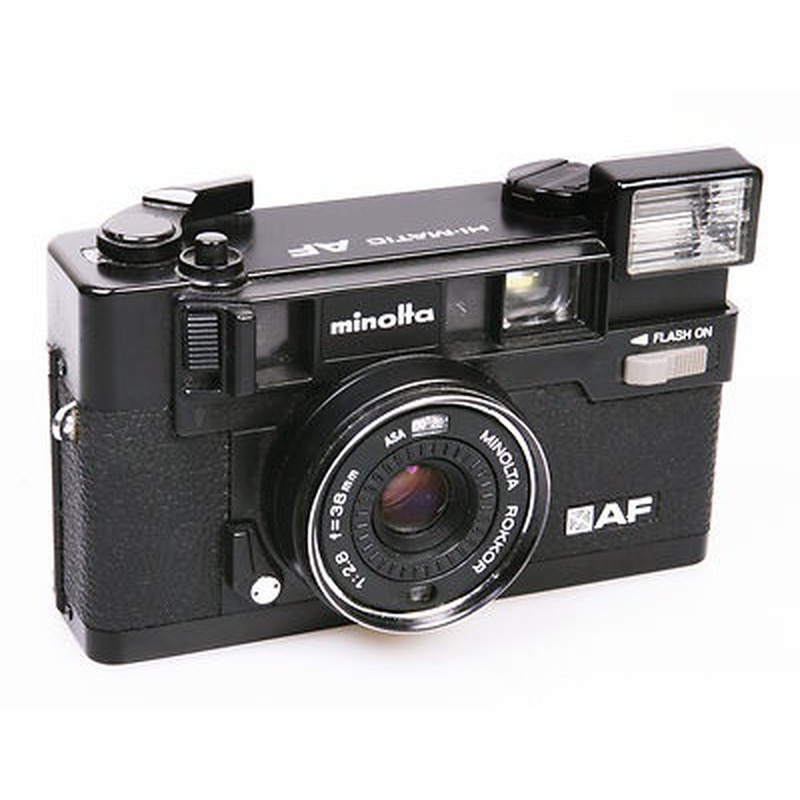
Minolta Hi-matic AF
Minolta · Japan · 1979 · 135 film
Introduced in 1979, the Minolta Hi-matic AF represents a typical late-1970s compact 35mm camera designed for the mass market. It was part of Minolta's long-running Hi-matic series, aimed squarely at consumers seeking an affordable, automatic point-and-shoot experience. As an AF model, its primary feature was an autofocus system, simplifying operation for snapshot photography and eliminating the need for manual focusing. Like contemporaries, it utilized a fixed focal-length lens, likely around 38mm, integrated with a simple CdS light meter controlling shutter speed automatically (aperture was probably fixed). Constructed primarily from plastic with a modest feature set, it prioritized ease of use and low cost over sophisticated controls or build quality.
The Hi-matic AF embodied the trend towards greater automation in consumer cameras during that era. Minolta leveraged its expertise in compact design to produce a lightweight and unassuming camera body, likely featuring a simple viewfinder and basic flash synchronization (potentially with a built-in flash accessory shoe or connector). Its core appeal was accessibility – a straightforward, "point and shoot" device capturing moments without requiring technical knowledge. While not technologically revolutionary or aimed at enthusiasts, it served its purpose reliably for countless casual photographers, contributing to the popularization of snapshot culture with minimal fuss.
Specifications
| Film Format | 135 |
/main.jpg)
 Enjoy this museum? Support on Ko-fi