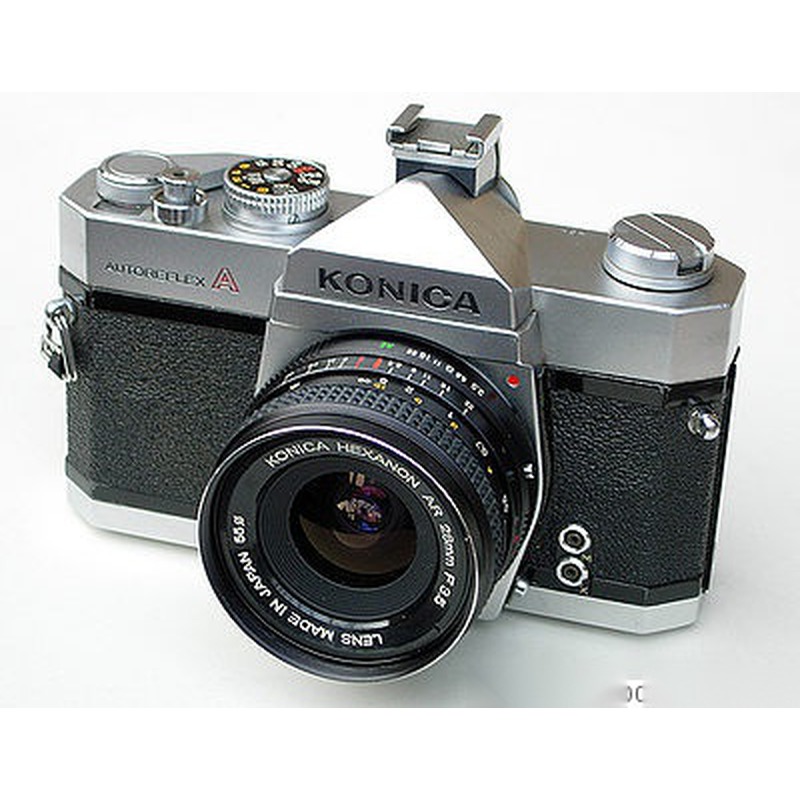
Konica Autoreflex A
Konica · Japan
The Konica Autoreflex A represents an important entry in Konica's line of single-lens reflex cameras during the 1960s. As part of Konica's Autoreflex series, this model likely featured through-the-lens (TTL) metering, which was becoming a standard feature in SLRs of this era but still represented a significant technological advancement at the time. Konica was known for their optical excellence, and this camera would have benefited from Konica's expertise in lens design, potentially utilizing Konica's Hexanon lenses that were renowned for their sharpness and color rendering. The camera probably had a sturdy metal construction typical of mid-20th century SLRs, with mechanical shutter systems that would have provided reliable service to photographers of the era.
In the competitive Japanese SLR market of the 1960s, the Autoreflex A positioned Konica alongside other manufacturers like Canon, Minolta, and Pentax, all competing for market share with innovative features and improved performance. While perhaps not achieving the legendary status of some competitors, the Autoreflex A contributed to Konica's reputation for producing well-engineered photographic equipment. This model likely served as an accessible introduction to Konica's SLR system for many photographers, with later models in the Autoreflex series building upon its foundation with more advanced features and improved ergonomics.
/main.jpg)
 Enjoy this museum? Support on Ko-fi