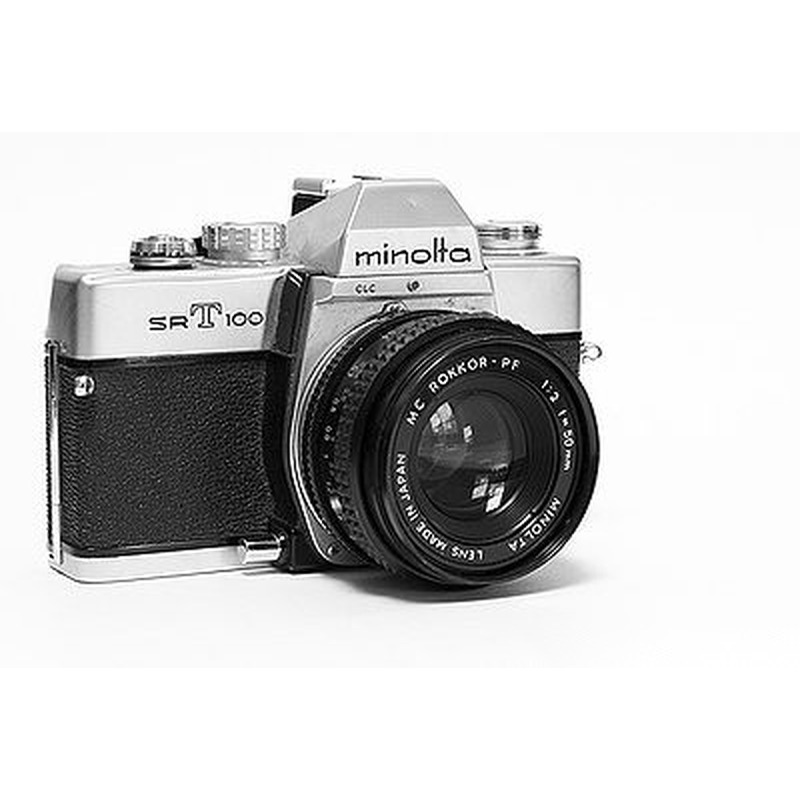
Minolta SRT-100
Minolta · Japan
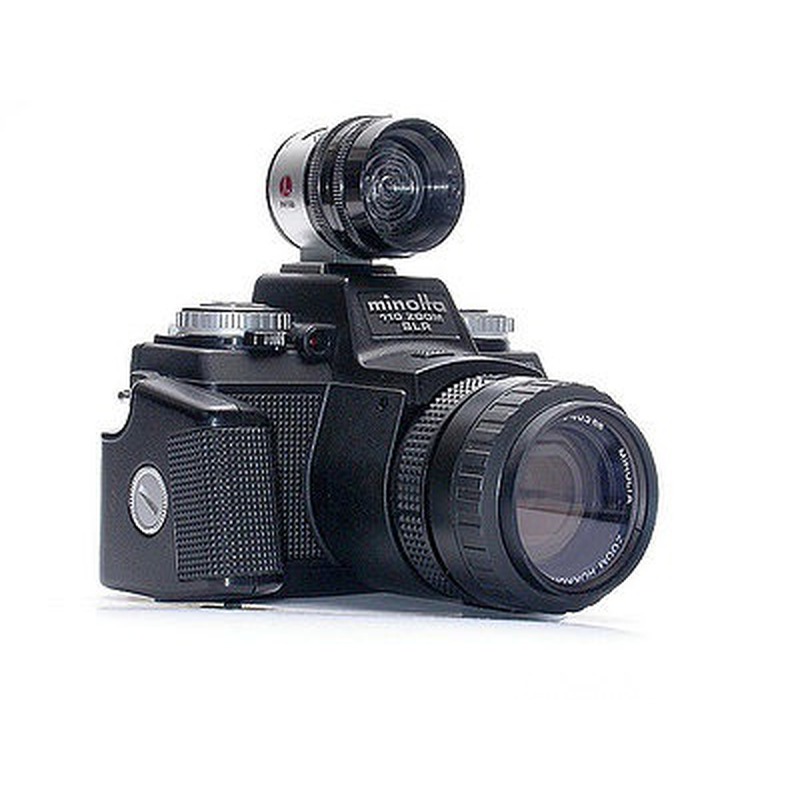
The Minolta SRT-100 represents a significant milestone in Minolta's SLR development, debuting in the early 1970s as a refinement of their earlier SR-T series. Its most notable innovation was the implementation of full-aperture through-the-lens (TTL) metering, allowing photographers to see the correct exposure directly in the viewfinder regardless of the aperture setting—a major leap in convenience and accuracy for its time. Building upon the robust mechanical foundation established by the SR-T 101, the SRT-100 featured a sturdy metal body with a familiar control layout, including the distinctive Minolta bayonet mount for its range of Rokkor lenses. It quickly gained popularity among enthusiasts and advanced amateurs for its reliable performance and precise metering, becoming a workhorse camera that solidified Minolta's reputation for producing well-engineered and user-friendly SLRs during a highly competitive era.
Part of Minolta's successful SRT line alongside models like the SRT-101 and SRT-303, the SRT-100 was positioned as a step-up model offering advanced features like mirror lock-up and a depth-of-field preview, appealing to photographers seeking more control than basic entry-level SLRs while avoiding the complexity of top-tier professional models. Its enduring legacy lies in its role as a practical, feature-rich camera that bridged the gap between amateur and prosumer markets, contributing to Minolta's dominance in the 35mm SLR market before the rise of autofocus systems. While not as universally iconic as the contemporary Nikon F, its design and innovations were highly influential within Minolta's own ecosystem and set standards for future generations of manual-focus SLRs.
/main.jpg)
/main.jpg)
 Enjoy this museum? Support on Ko-fi