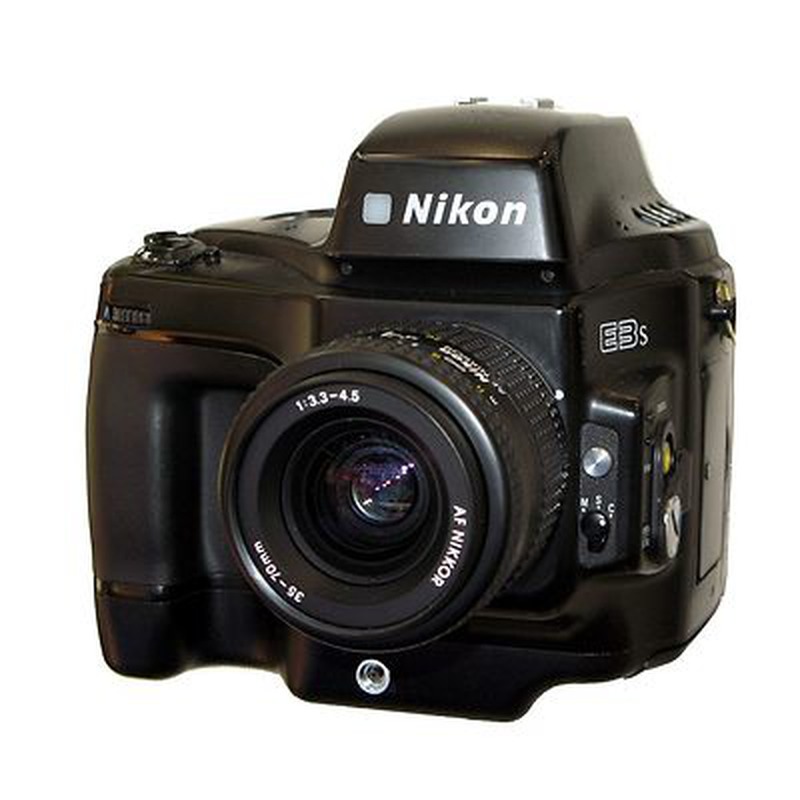
Nikon E3
Nikon · Japan · 1999 · 135 film
The Nikon E3, introduced in 1999, stands as Nikon's first serious attempt at a professional digital SLR body designed for the 35mm (135) format lens system. Building on the foundation of the film-based F5, it housed a Kodak-manufactured 1.3 megapixel APS-C CCD sensor. It employed Nikon's F-mount, offering compatibility with existing Nikkor lenses, though only AF-D lenses provided full metering and autofocus functionality. Notably, it featured a robust, weather-resistant magnesium alloy body reminiscent of the F5, a pentaprism viewfinder, and a top shutter speed of 1/800s. Its key innovation was its speed; capable of 3 frames per second (fps), it was significantly faster than many contemporary professional DSLRs of its era, targeting photojournalists and sports photographers transitioning to digital. However, its use of the APS-C sensor rather than a full-frame sensor and its relatively low resolution by today's standards limited its long-term appeal compared to film's quality, and its slow LiveView-like preview on the top LCD was a compromise for its time.
Despite its professional build and early digital focus, the E3 was ultimately a transitional product. It was overshadowed by the simultaneous release of Nikon's higher-resolution D1 (also using a Kodak sensor) just months later, which offered a full-frame sensor (effectively) and 2.74 megapixels, rendering the E3's lower resolution and higher price point less competitive. Its significance lies primarily in Nikon's ambitious leap into the pro DSLR market with a body designed to feel familiar to F5 users, though its technical specifications, particularly the sensor size and resolution, quickly became outdated. It represents a critical, albeit fleeting, stage in Nikon's digital SLR development, demonstrating both the challenges and rapid pace of early professional digital adoption.
Specifications
| Film Format | 135 |
/main.jpg)

 Enjoy this museum? Support on Ko-fi