Pricing
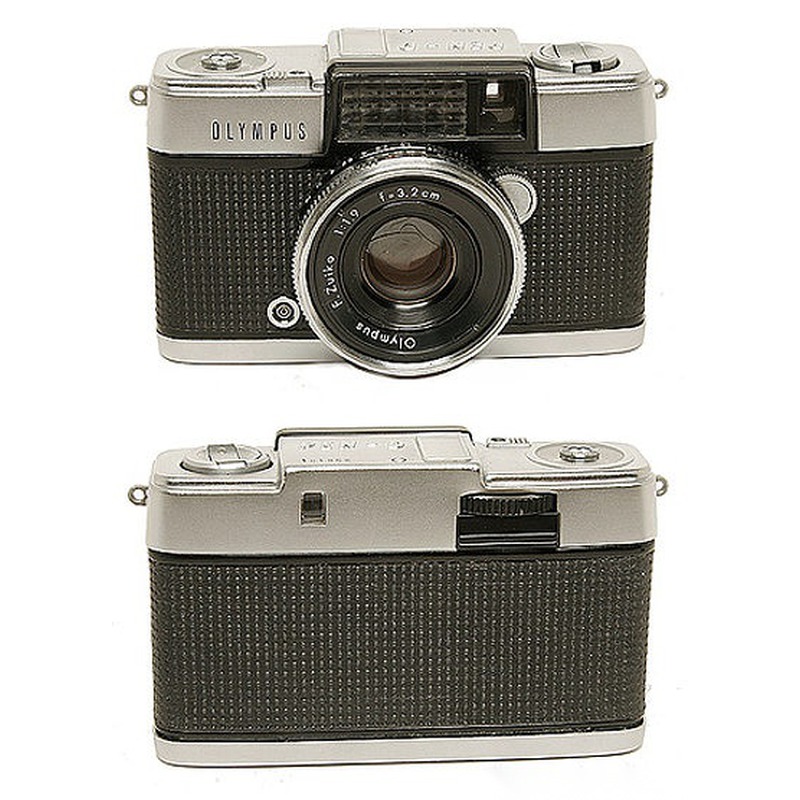
Olympus Pen D
Olympus · Japan
The Olympus Pen D is a half-frame 35mm camera introduced in 1960 as part of the original Pen series. Designed by Maitani Yoshihisa, it embodies Olympus's early focus on making photography compact, affordable, and accessible. Utilizing standard 35mm film but capturing images on a 24x18mm format (half the standard frame), it allowed photographers to shoot 72 exposures per roll. Characterized by its simple, robust construction, the Pen D typically features a fixed Zuiko 28mm f/3.5 lens and basic manual controls – aperture, shutter speed (around 1/200s to 1s), and focus. Its charm lies in its straightforward operation, compact portability, and reliable performance for everyday snapshots and travel photography, contributing significantly to the popularity of the half-frame format during the 1960s. It represents a practical, mass-market approach to camera design without the complexity or cost of interchangeable lens systems.
While not featuring groundbreaking innovations like contemporary SLRs, the Pen D was historically important for popularizing the concept of the "system" camera in the sub-compact segment. It demonstrated that high-quality results could be achieved with a fixed-lens, body-integrated camera, paving the way for future Olympus compact designs like the Pen F and eventually the OM system. Its affordability and ease of use democratized photography for a wide audience and established Olympus as a key innovator in camera miniaturization, influencing the entire industry's direction towards smaller, more portable cameras.
 Enjoy this museum? Support on Ko-fi