Pricing
Tenax I
Tenax
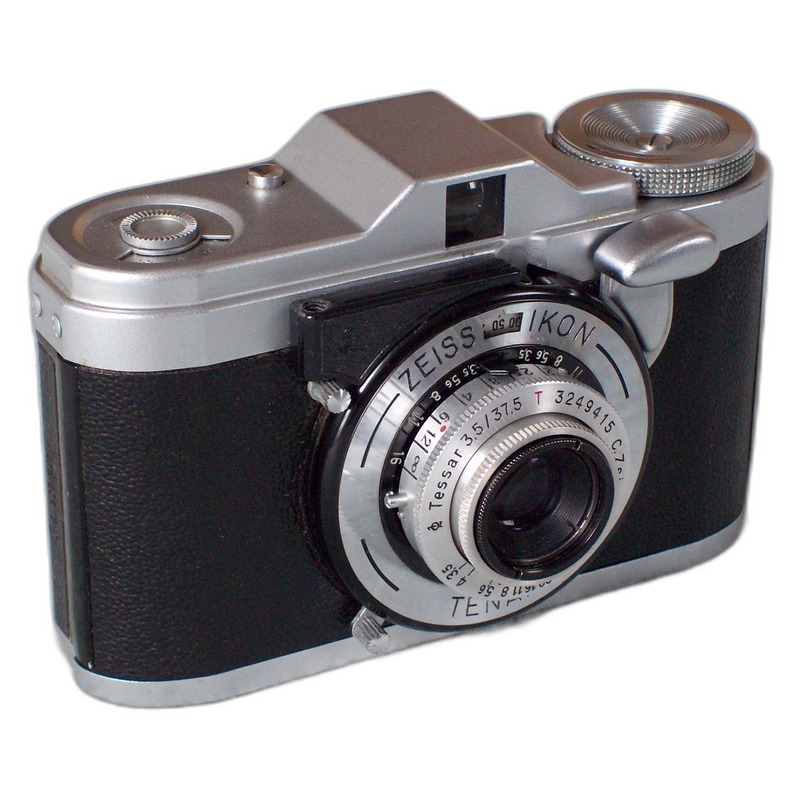
The Tenax I represents an early milestone in the adoption of 35mm format for still photography, emerging from Tenax—a German manufacturer and subsidiary of ICA (Internationale Camera Aktien Gesellschaft) later absorbed into Zeiss Ikon. Debuting in the mid-1930s, it addressed the growing demand for compact, portable cameras amid the rise of photojournalism and candid photography. Its die-cast aluminum body exemplifies the era’s shift toward lightweight yet durable construction, breaking from bulkier predecessors. Technically, it featured a rotary focal plane shutter with speeds from 1 second to 1/500th, a coupled rangefinder for precise focusing, and a double-exposure prevention mechanism—innovations that enhanced reliability for handheld shooting. Though Tenax was less prominent than competitors like Leica, the camera’s robust design and ergonomic controls underscored its professional aspirations, appealing to photographers seeking accessible precision without excessive weight.
While specific photographers linked to the Tenax I are undocumented in available records, its design suggests it was favored by documentary and street photographers prioritizing discretion and speed. The camera’s legacy lies in its role within the 35mm format’s maturation, bridging the gap between experimental cine-derived cameras and modern interchangeable-lens systems. Despite limited production numbers, Tenax I’s technical choices—including an integrated exposure counter and simplified loading system—reflected pragmatic engineering that influenced later 35mm iterations. Its existence highlights the collaborative manufacturing landscape of 1930s Germany, where Tenax contributed to a broader evolution toward miniaturization and accessibility in photographic tools.
Specifications
| Lens / Mount | Zeiss Tessar 37.5mm f/3.5 lens |
 Enjoy this museum? Support on Ko-fi